|
|
|
|
|
I'm going to say something that might sound sacrilegious coming from an equipment guy: You don't need a new driver to find more distance. Sometimes it's just a weight adjustment or different shaft. Not everything requires dropping a grand on the longest club in your bag.
But when you do make a tweak, here's where most people go wrong. They're laser-focused on carry distance—which, fair enough, is the right metric to track. They're staring at spin, launch angle, attack angle. These are all solid data points, to be fair. But almost nobody bothers to look at what's happening on the way down, better known as descent angle.
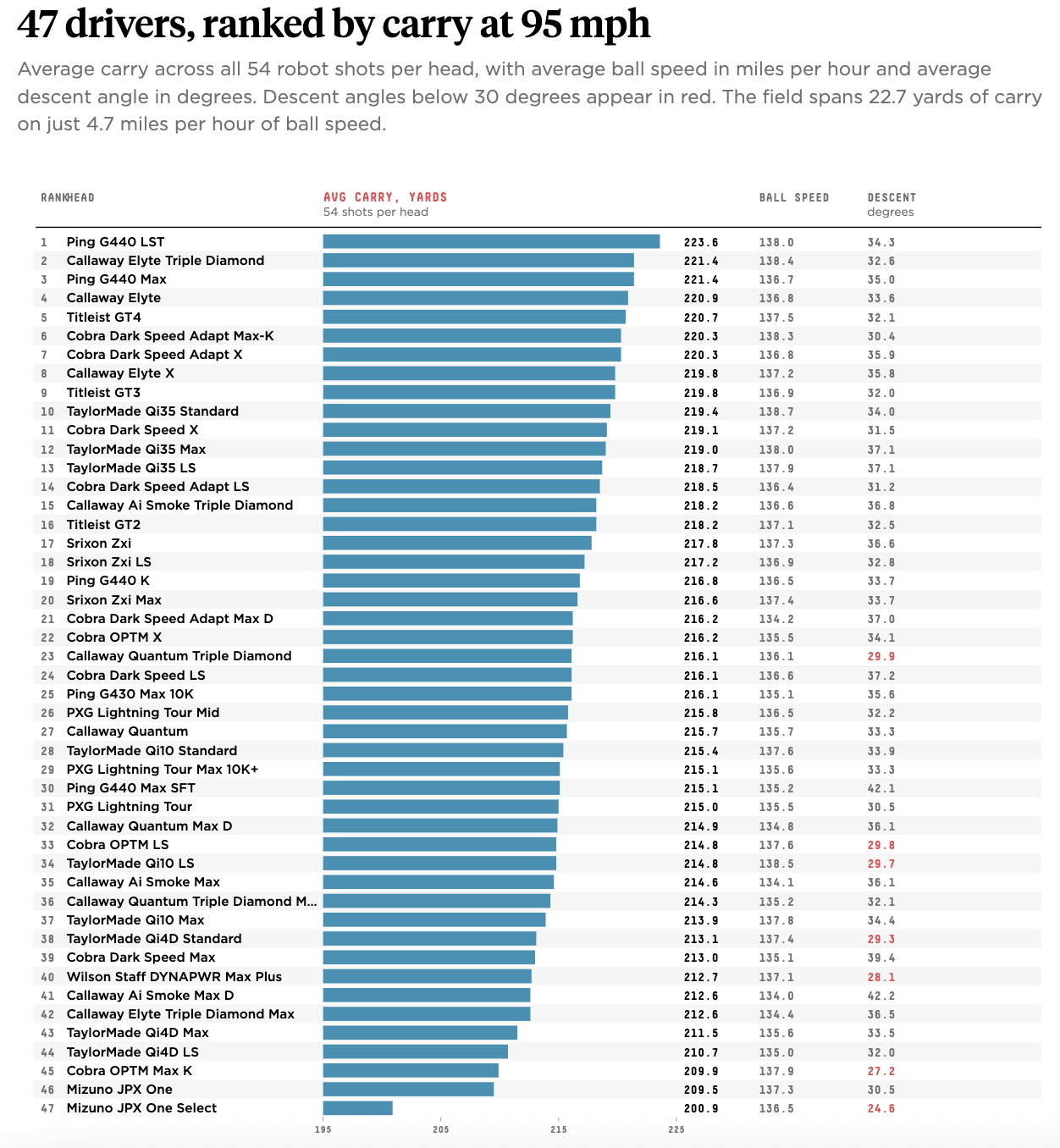
Here's the thing that blew my mind during recent testing we conducted with 47 drivers on the Golf Laboratories swing robot. On the screen, two drivers with identical ball speeds look the same. In reality, one carried the ball 20.5 yards farther. That's not a ball-speed story; it’s actually a descent angle story.
For the longest time, fitters have been hammering home the same message—keep the descent angle in the mid-to-high 30s and your carry distance is golden. It's treated like the holy number, the checkpoint that tells you whether you're dialed.
It turns out, it's not a window at all. The number is actually a floor. And there's a cliff as well.
Our interactive chart has all 47 heads broken down by ball speed and descent angle. You'll see exactly where the cliff is, and which drivers actually clear it.
|
|
|
|
|
|
|
|
|
|
|
|
| Jonathan Wall
|
|
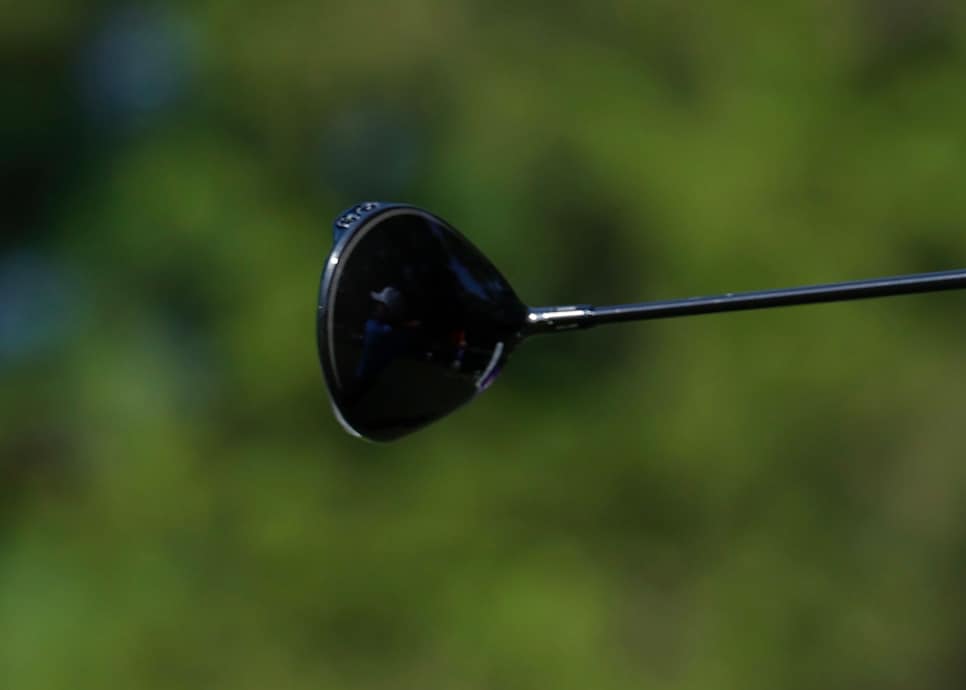
Scottie Scheffler swapped his TaylorMade Qi10 driver for a Qi4D (8 degrees), and early returns have been solid. His 61 on Friday left him three shots ahead of the field at the FedEx St. Jude Championship—a tournament he'd go on to win by eight shots—as he gained more than 1.5 shots off the tee with the new big stick.
This isn't the first time Scheffler has tried out Qi4D, but it is the first time he's used one with some unique crown cosmetics. With the latest Qi4D build, the 30-year-old added a gloss crown—a visual throwback to his previous Qi10. The standard Qi4D comes equipped with a matte finish on the crown. It's a small creature comfort for a guy who's won three majors and knows exactly what he wants to stare down at when he addresses the ball.
|
|
|
|
|
| Jonathan Wall
|
|
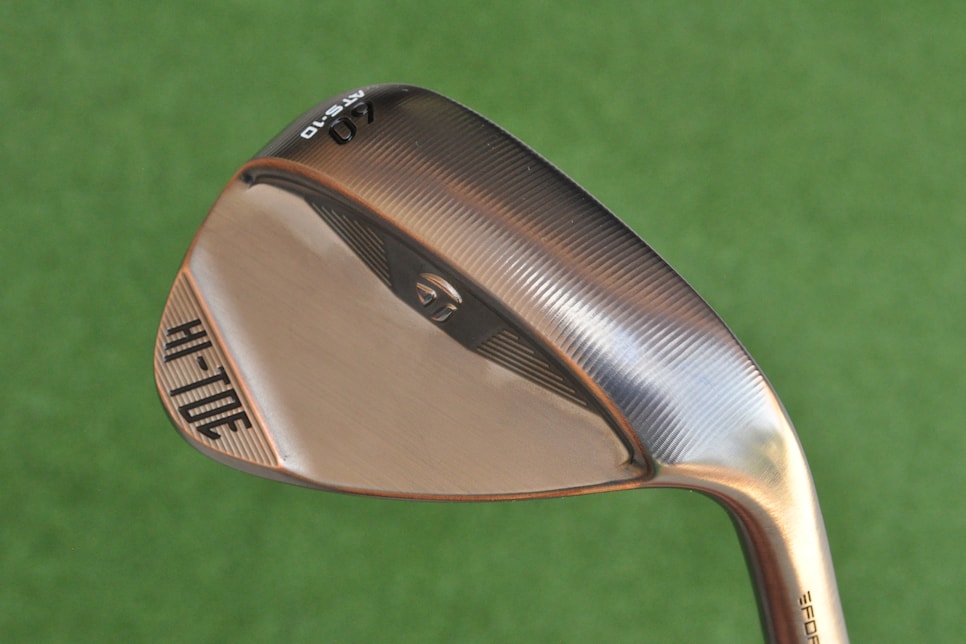
The fifth version of TaylorMade's popular Hi-Toe wedge is the first one forged from soft carbon steel. While head material hasn't been the story with previous versions, it's a headline with Hi-Toe 5, which now boasts a similar premium feel to the company's Milled Grind lineup. The lineup consists of five grinds (50-60 degrees) and full-face grooves that feature the same saw-milled setup as Milled Grind 5. The grooves run from heel to toe, along with laser-etched channels meant to displace water so wet turf doesn't cut spin.
TaylorMade's Hi-Toe 5 retails for $200 and hits shelves Sept. 3. There's also a custom program ($250) if you want your initials on it.
|
|
|
|
|
|
|
| Jonathan Wall
|
|
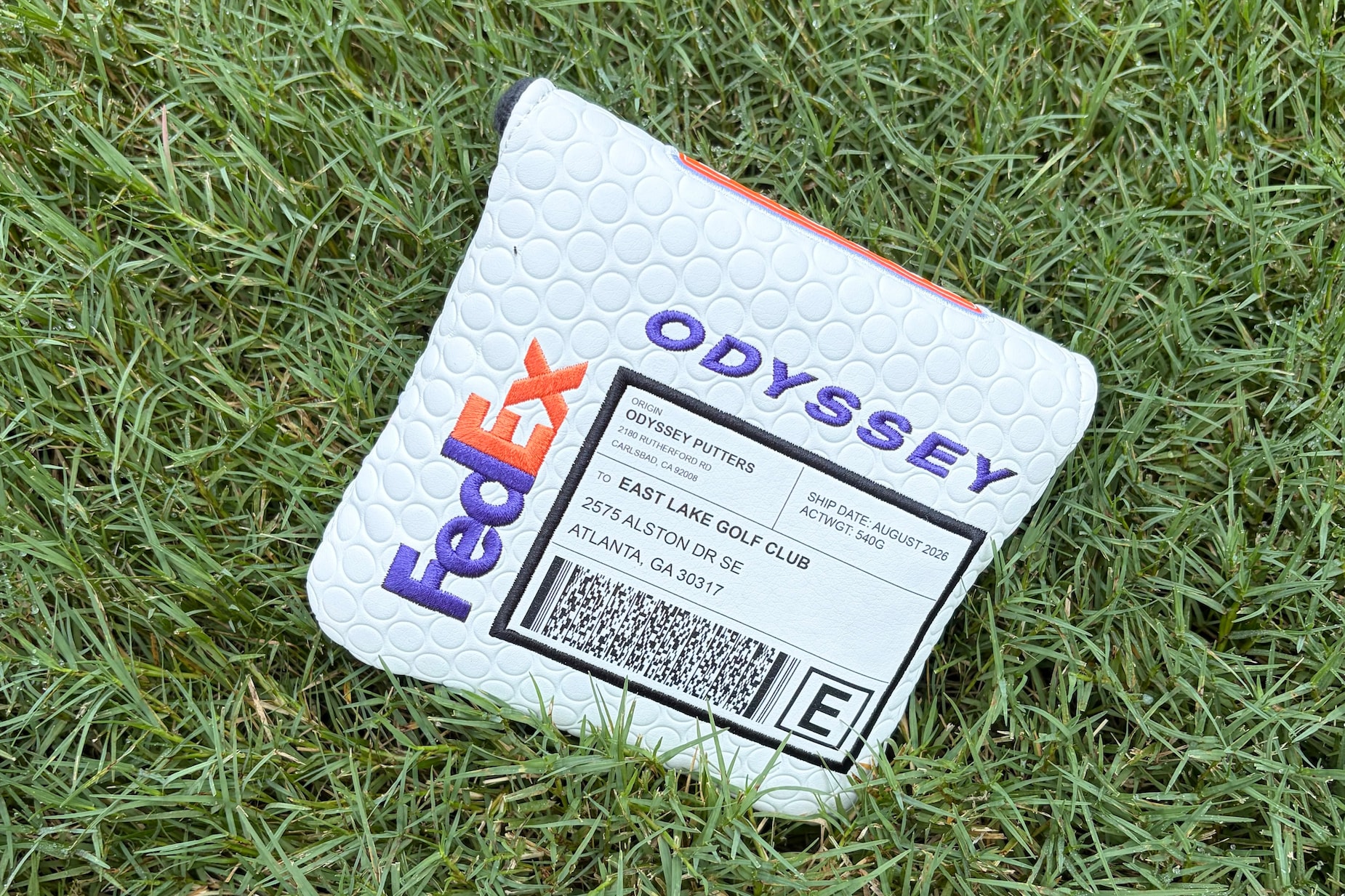
Odyssey Golf is partnering with FedEx on a special putter cover that will benefit three communities during the Tour's playoffs. Unveiled during the FedEx St. Jude Championship, the putter collaboration has a direct funding mechanism: for every foot of putt made by Odyssey players during the playoffs, FedEx donates to First Tee chapters. The total commitment reaches up to $75,000, split evenly among local chapters in Memphis, St. Louis and Atlanta—the three cities hosting playoff events this summer. |
|
|
|
|
|
|
|
|
|
|
|
|
|
|
|
|
|
|