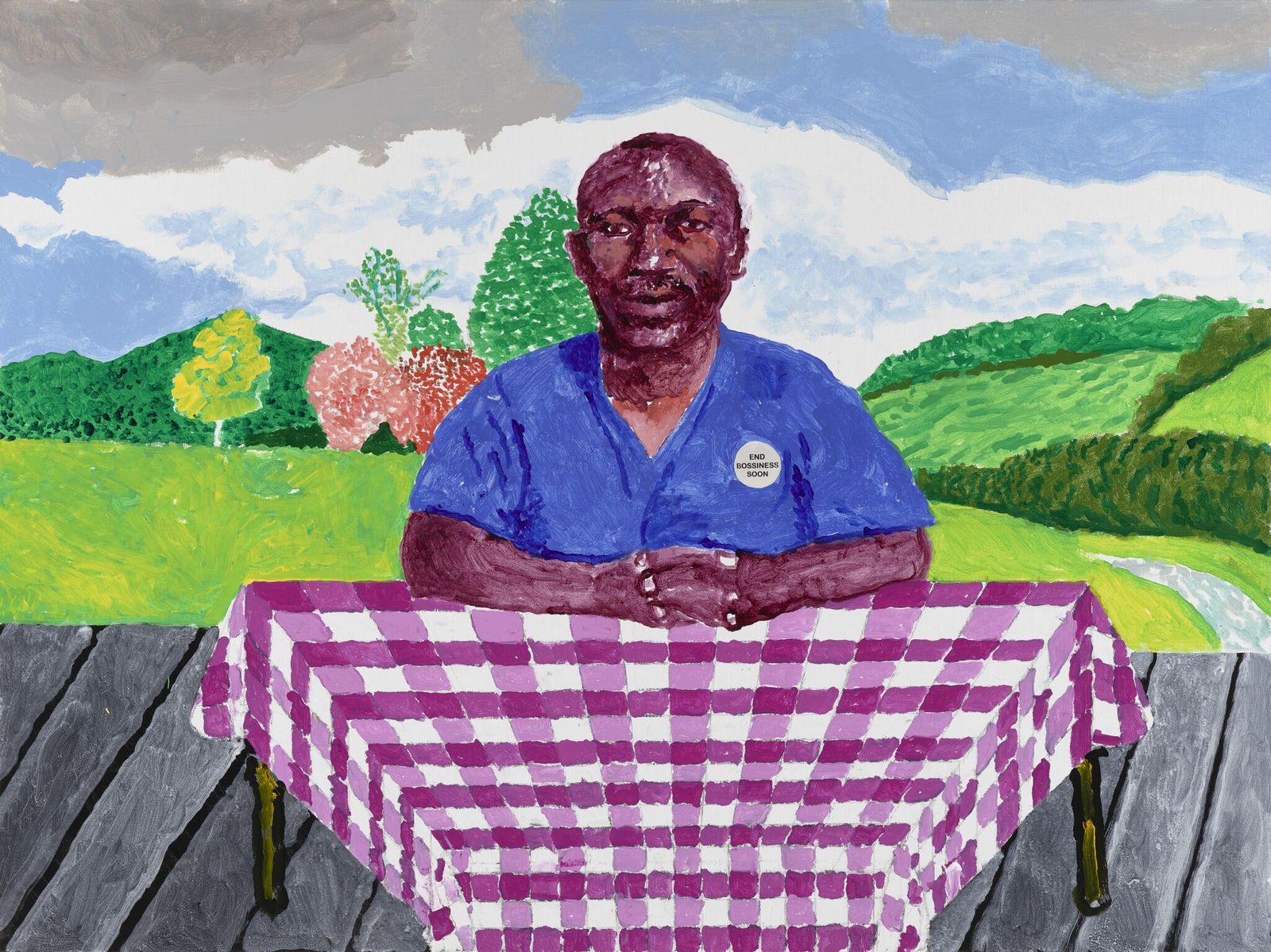
| | Hannah Silver, arts & culture editorThe start of spring signals a welcome shift into a new mood. For artists, it marks the time to showcase the fruits of winter, and this month has seen major openings in London, Wallpaper’s home city. Appropriately for the season, David Hockney just unveiled his musings on the fluctuations of time at Serpentine, presenting new paintings and works on the iPad that ask us to slow down and appreciate the beauty in small moments. There is the same sense of life affirmation at Tate Modern, in Tracey Emin‘s raw and largest retrospective yet, while at the Royal Academy of Arts, Rose Wylie’s colourful works will put a spring in your step. |
2026’s Oscar-nominated production designers on creating perfect worlds |
 |
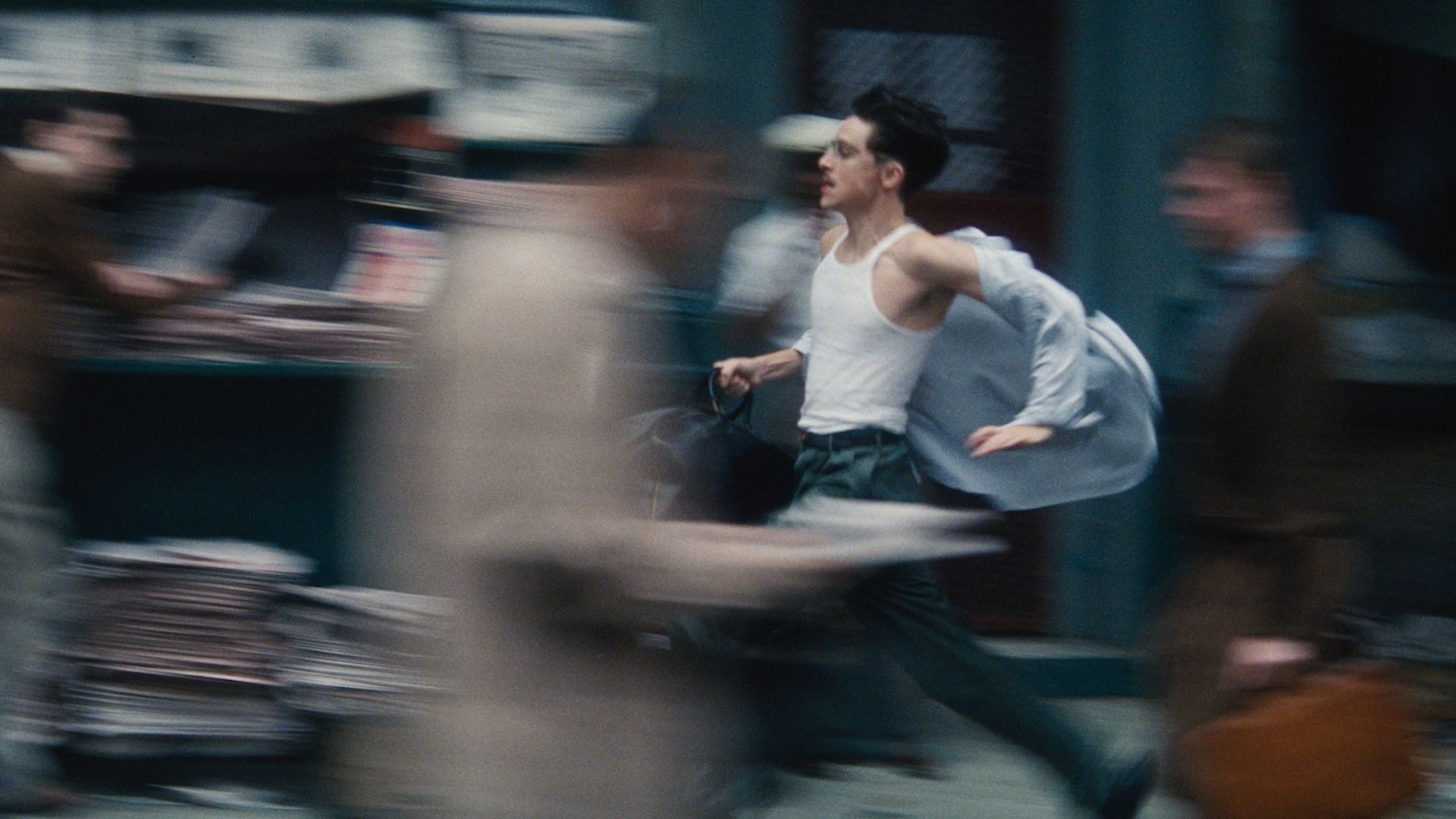
‘Our work is at its best when it goes unnoticed,’ says Jack Fisk, production designer of Marty Supreme, one of five films in the running for best production design at the 98th Academy Awards this Sunday (15 March). To backdrop the story of a tennis table prodigy (Timothée Chalamet) who is determined to be recognised as the greatest player in the world, Fisk, along with set decorator Adam Willis, set out to recreate 1950s New York, aiming for ‘an immersive world that felt completely real’.
The design team gave the Lower East Side’s Orchard Street a major exterior makeover to bring the tenement buildings and shops back in time. To portray Milton Rockwell (Kevin O’Leary) and Kay Stone’s (Gwyneth Paltrow) extravagant Upper East Side residence, the team rented out a reportedly $38-million mansion across from the Metropolitan Museum of Art. An array of other period-specific sites were moulded for the film, including a table-tennis parlour, a rural farmhouse, a Broadway theatre and a London hotel.
We spoke with all the 2026 production design nominees – for Sinners, Frankenstein, Hamnet and One Battle After Another, alongside Marty Supreme – for an insight into their world-building processes and soulful sets. Who gets your vote?
|
|
Lautner’s Castle is a midcentury LA gem refreshed for the 21st century |
|
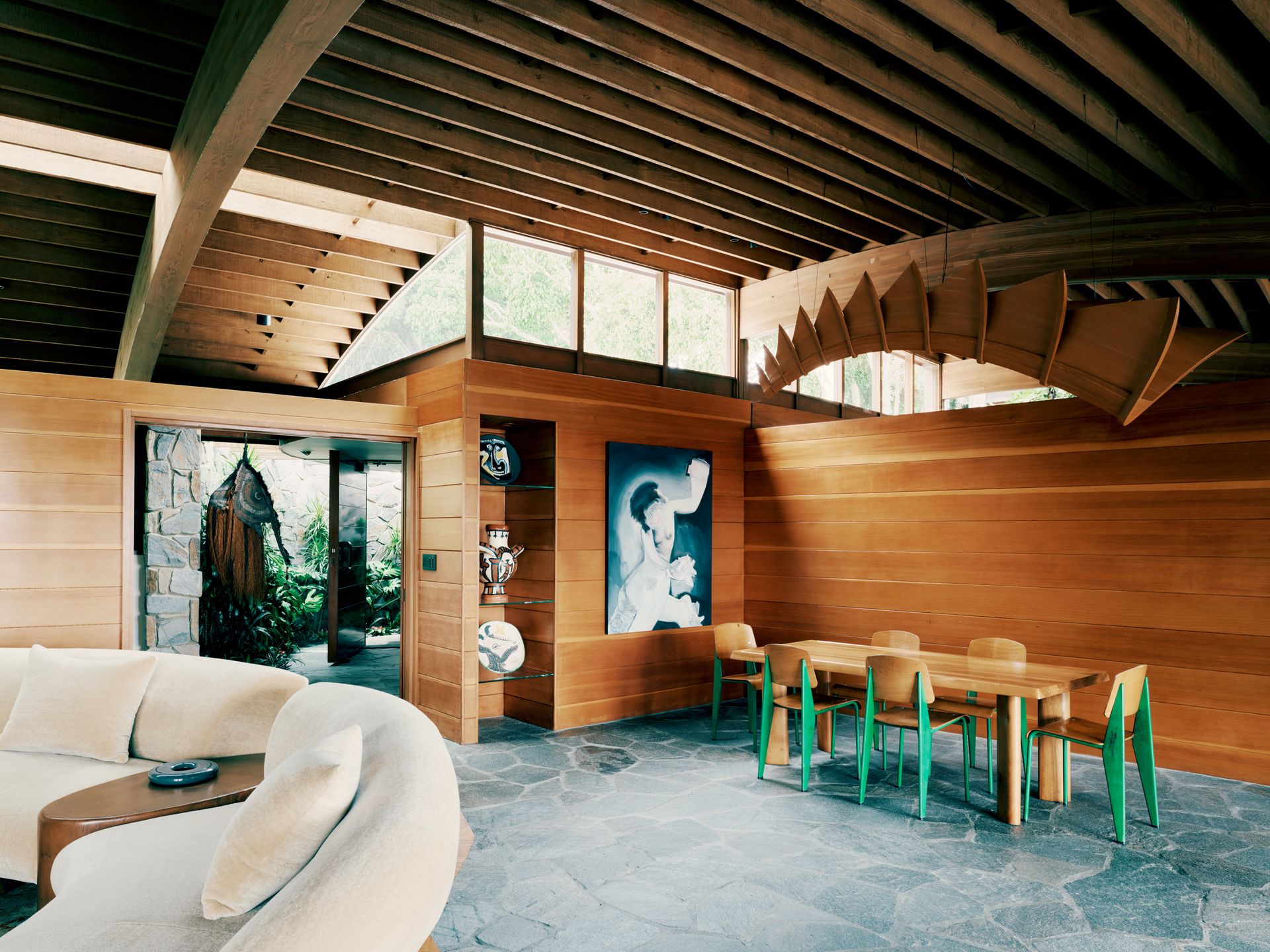
How do you improve a John Lautner classic? The American architect – who began his career in the 1930s as a Frank Lloyd Wright apprentice – designed over 200 projects during his career, including the futuristic Garcia House and the Sheats-Goldstein Residence, both in the hills of Los Angeles. It is also in LA that local firm Conner + Perry Architects was recently tasked to restore and remodel one of Lautner’s masterpieces from the early 1980s, Lautner’s Castle. Positioned along a steep hillside, the home is defined by an array of cylindrical stone turrets along the south face. These are both structural and architectural, showcasing Lautner’s emphasis on natural materials and a harmonious relationship with the landscape. More intriguingly, each stone column also hosts a programmatic element. One in the living room contains a functioning wet bar, while the kitchen one is a built-in pantry. The pillars also help frame the city and canyon views that unfold beyond the exterior balcony that runs the length of the house. Architects Kristopher Conner and James Perry – entrusted to make enhancements that would not disturb Lautner’s Castle’s original modernist architecture but would meet the needs of a 21st-century family lifestyle – take Carole Dixon on a very special house tour.. |
|
London design studio YY is asking all the right questions |
|
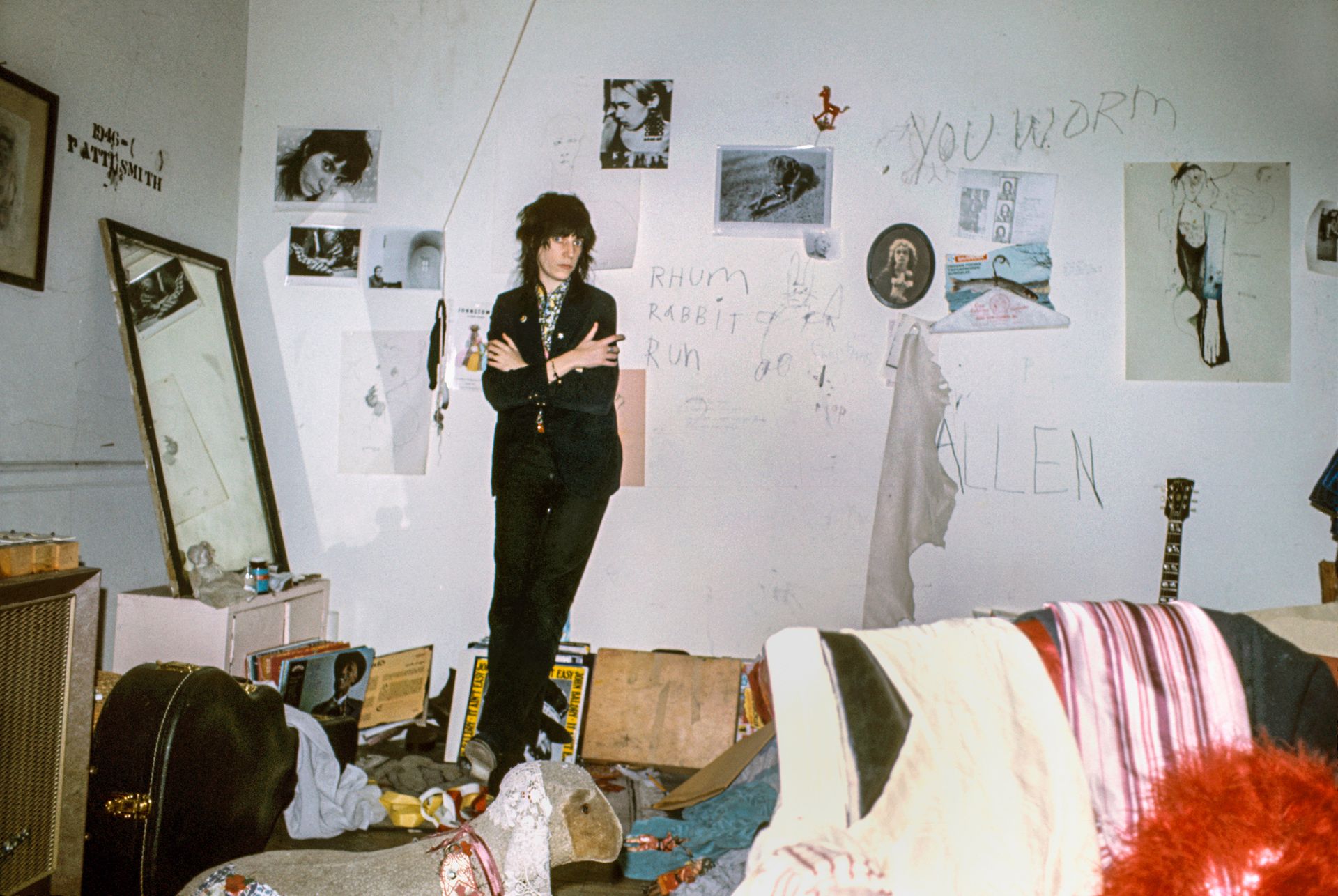
‘A lot of what we do is ask questions and discuss open-ended ideas as a means of communicating to people that things don’t necessarily have to be final for them to exist,’ says Tawanda Chiweshe, co-founder, along with Francisco Gaspar, of design studio YY. He’s talking from the duo’s London HQ, where he is surrounded by examples of their work. An oversized, blue plastic chair, inspired by the ‘K67’ modular kiosk (designed in 1966 by Slovenian architect Saša Mächtig) and inset with thick black cushions, was presented in 2024 at Spazio Maiocchi in Milan as part of a Nike installation (to launch its ‘Alphafly 3’ sneaker). The ‘AA67’ bookshelf speaker, borne of the same inspiration, was put into production with Caliper. T-shirts hang from the ceiling, and sneakers are stacked on shelves.
All around is paraphernalia from past collaborations – with Ikea, Cassina, Alessi, Vitra, Braun and Mercedes-Maybach – revealing the prolific studio’s reach. The designers met at Alaska Alaska, the studio founded in 2017 by Virgil Abloh, and led by Chiweshe and Gaspar since Abloh’s untimely passing in 2021. YY marks a new path: the pair are emerging discreetly from the shadows, ready to make their own point of view known – Natalia Rachlin asks them about their next steps.
|
|
|
| |