| | Anna Solomon, digital writer
Recently, Unesco added three modernist inscriptions to its prestigious list: works of Alvar Aalto in Finland; the city centre of Gdynia, Poland; and the architecture of Tashkent, Uzbekistan. The World Heritage List is increasingly making room for 20th-century architecture – a sign that the very idea of heritage is expanding.
That bears out at Wallpaper*, where our inboxes chronicle a steady stream of restorations and celebrations of modernist architecture. It's a long-held fascination that buoys a market for modernist and midcentury houses, as coveted properties pass between custodians who well understand their value. It also means we get to tour some incredible spaces without even leaving home.
|
 |
 |
|
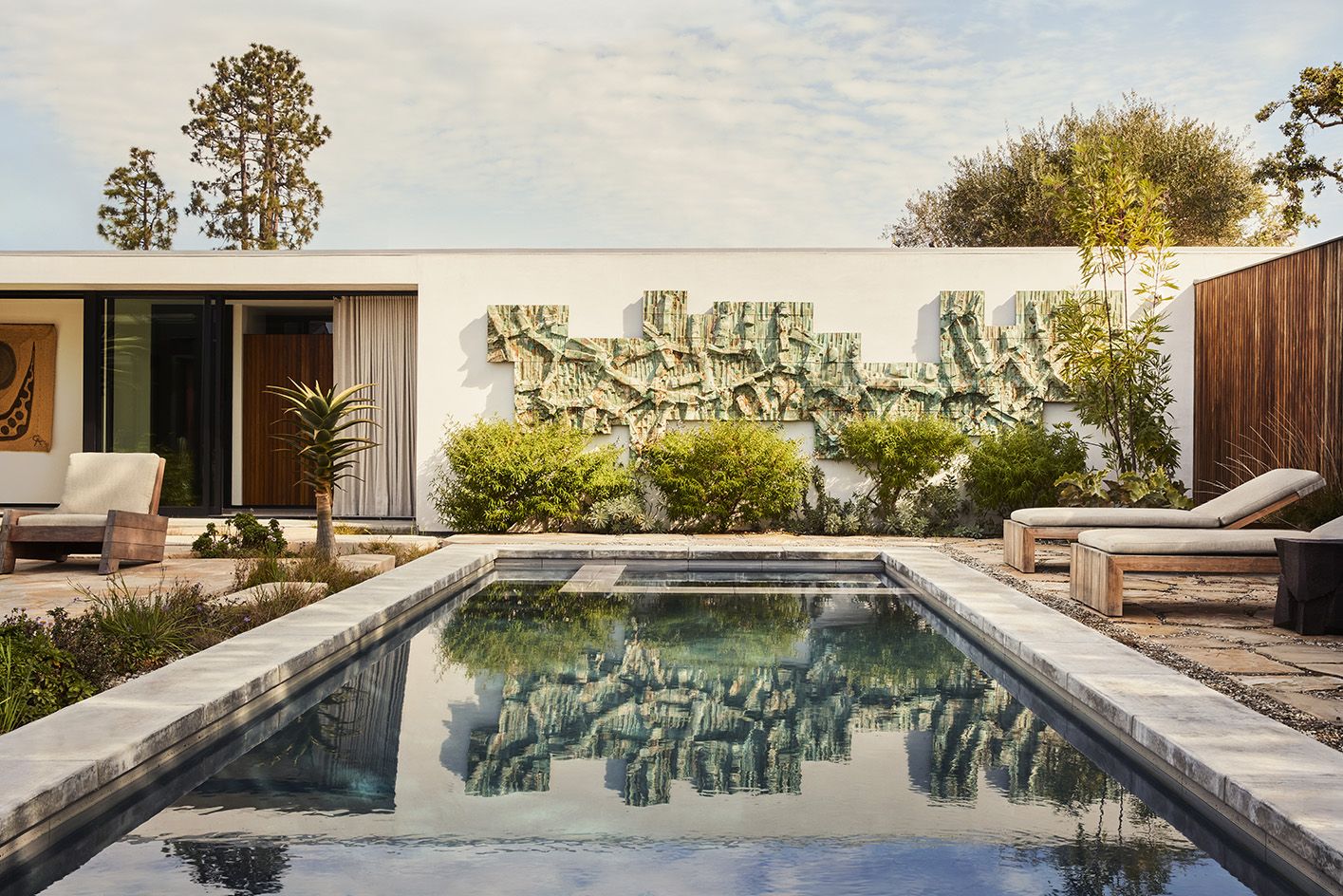
This summer we’ve seen Frank Lloyd Wright’s Shavin House, his only project in Tennessee, come to market for the first time in seven decades. Three of Kendrick Bangs Kellogg’s organic California homes also went up for sale – in Solana Beach, Valley Center and La Jolla – alongside Richard Lareau’s San Diego Bone Residence. And one of the original midcentury homes in Corbin Palms – the Valley enclave where Palmer & Krisel first tested Palm Springs’ architectural language – joined the fray. There is an equal appetite to restore and reimagine these icons: John Lautner’s Sheats-Goldstein Residence recently received a refresh, while a 1966 Pierre Koenig house has undergone its own revival.
For Londoners, there’s a chance to explore this fascination ‘IRL’ next month, when Open House Festival returns. From 12-20 September, the doors to the city’s modernist (and contemporary, medieval and everything in between) gems will be thrown open. We’ll see you there.
|
|
 |
|
|
|
 |
|
 |
|
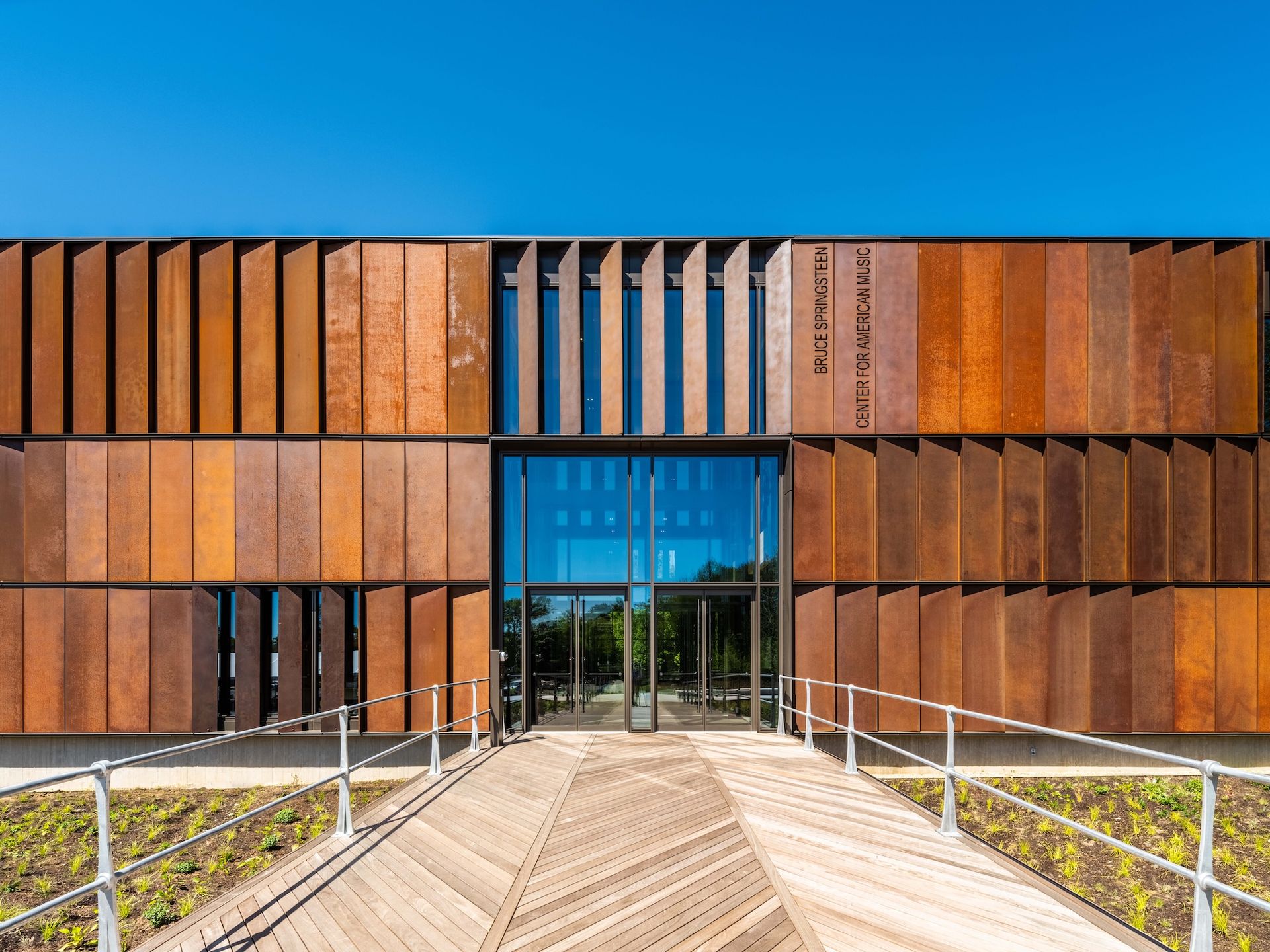
Bruce Springsteen had just one word to describe his new museum: ‘Badass’ |
|
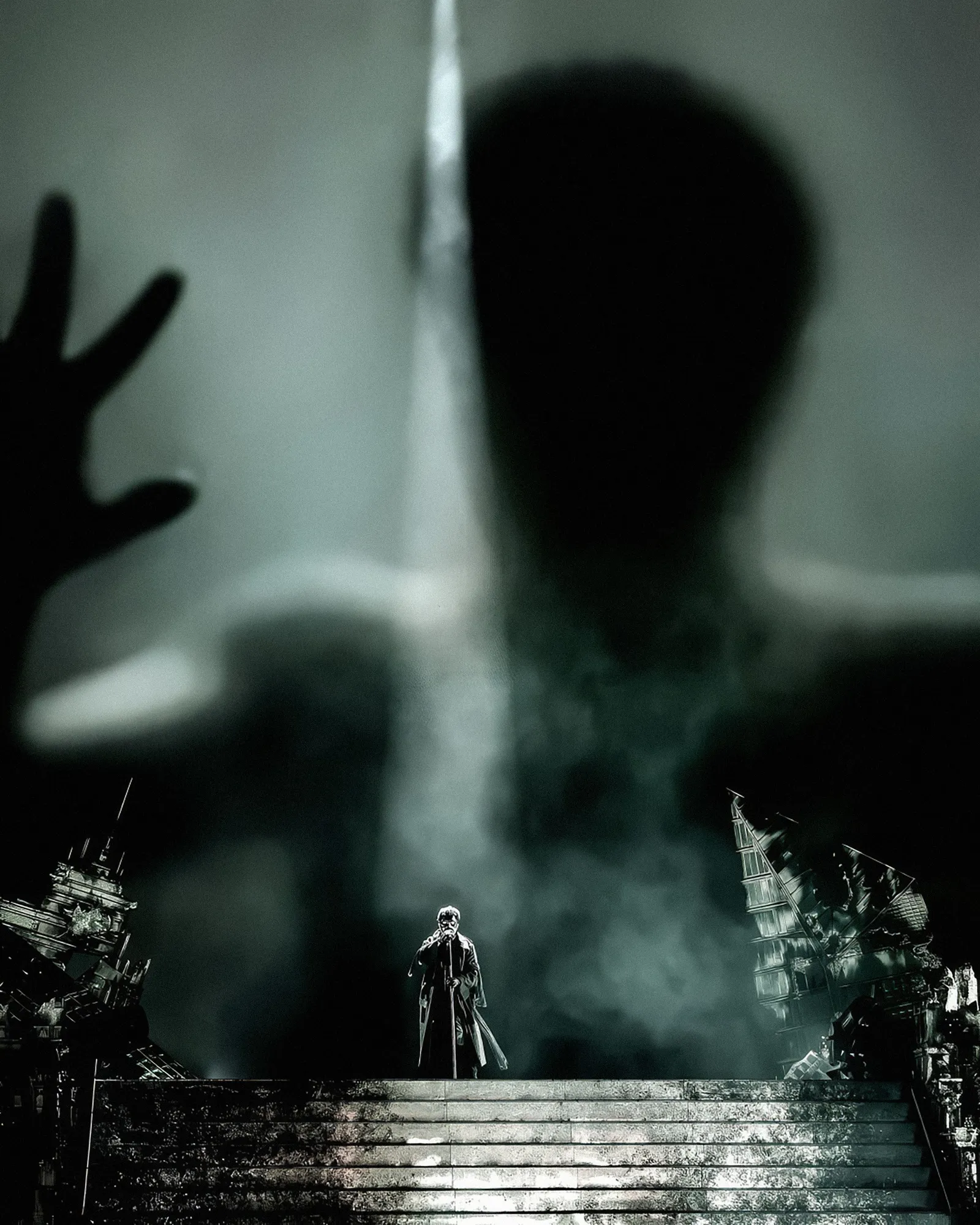
One afternoon in 1969, a group of shaggy-haired rock musicians took the stage during a music festival held on Monmouth University’s campus in West Long Branch, New Jersey. The band, a local Jersey Shore act called Child, was fronted by a 20-year-old named Bruce Springsteen. What ensued was a ‘wild, mind-bending show’, the student newspaper reported – so raucous, in fact, that neighbours complained about the noise. Springsteen, of course, went on to achieve international superstardom and is considered one of the most influential American musicians alive today, with 20 Grammys, a Rock and Roll Hall of Fame induction and a National Medal of Arts from President Joe Biden. But echoes of that early performance still reverberate around Monmouth University, thanks to a new museum and research centre dedicated to preserving Springsteen’s legacy and sharing the ever-evolving story of American music.
Designed by New York-based firm CookFox Architects, The Bruce Springsteen Center for American Music is about narrative, inside and out. Architect Rick Cook didn’t count himself as a big fan of ‘The Boss’ before taking on the project. But gradually, he fell under the singer-songwriter’s spell: ‘I actually fell in love with Bruce as a great American storyteller. That I understood, because architecture is storytelling,’ Cook says. Anna Fixsen reports from the Garden State.
|
|
Tilda Swinton and Olivier Saillard are reinventing the fashion exhibition |
|
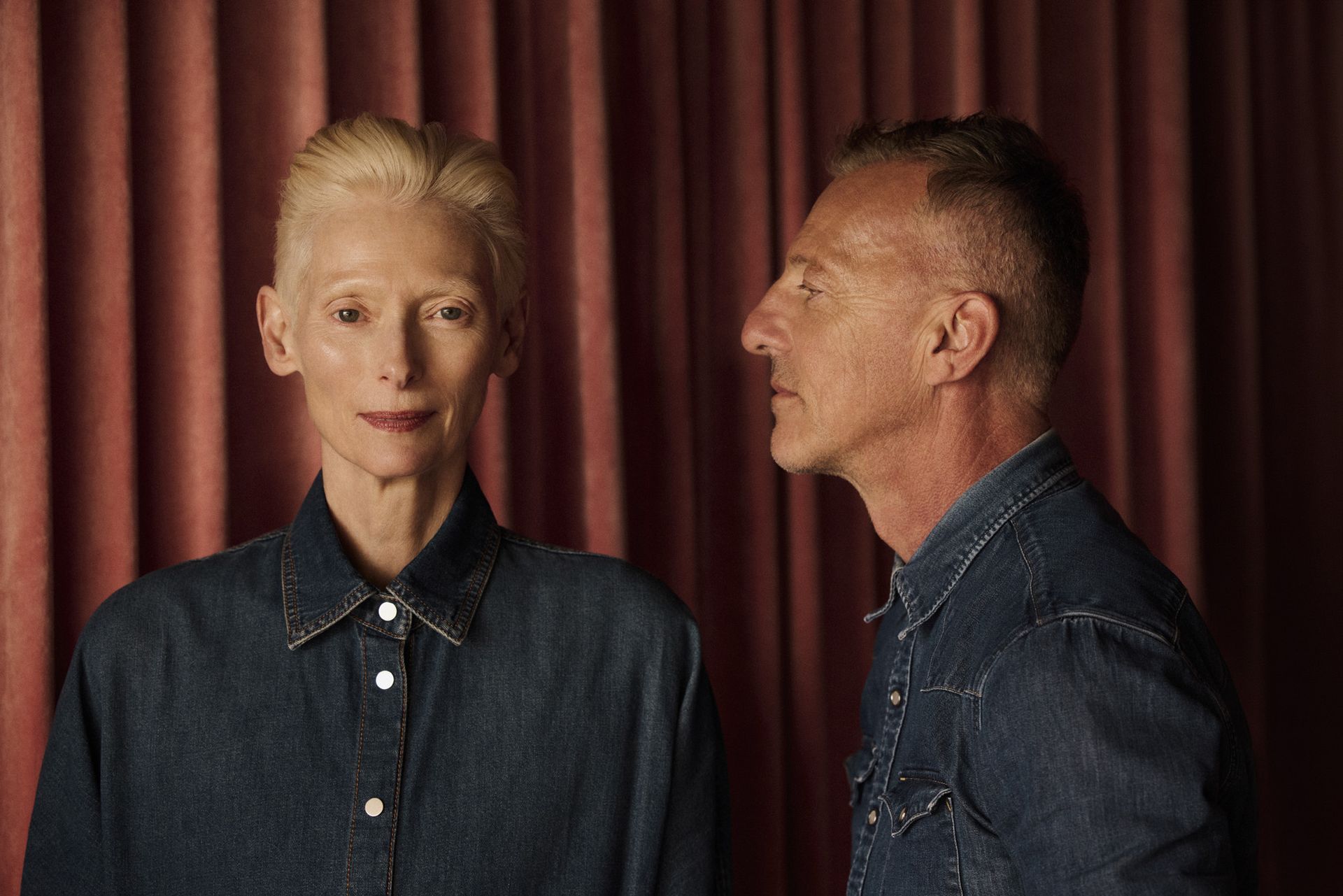
Tilda Swinton is proposing pink lemonade in a navy silk Chanel two-piece from her dressing room at the Onassis Ready, a multimedia arts space in Athens. Her yellow-white hair is brushed back to reveal that extraordinary face. To her right sits one of her co-conspirators, the fashion curator, historian and director of Fondation Azzedine Alaïa, Olivier Saillard. For the past 14 years, the pair have created a series of highly original performances – often referred to as ‘living exhibitions' – in various museums and galleries. These thoughtful, thought-provoking acts seem conceived to unpick our collective fascination and often complex, multilayered relationships with clothing. As a three-year-old, Swinton wore a white organza party dress. She vividly recalls in ‘The Biographical Wardrobe' – one of her and Saillard's most recent collaborations – the reaction this dress elicited in her elder brothers. ‘You look pretty…' they said, from the family staircase, ‘revolting!' She leans in to pick up the catalogue for her ‘Ongoing' exhibition, which opened at the Filmmuseum in Amsterdam in late 2025, before heading to Athens – it's co-produced by the Onassis Foundation – and will eventually tour globally. Flicking to a photograph of herself wearing said gown, a bow nestled neatly in her hair, Swinton, her voice comically teetering up several octaves, cries ‘I look fabulous!' Swinton conceived and curated ‘Ongoing' to illustrate a ‘fellowship' of collaborators with whom her creative exploration is both longstanding and active. It features directors Joanna Hogg (their mutual short film debut was 1986's Caprice); Derek Jarman (with whom Swinton made eight films and the only member of the cohort no longer alive); Pedro Almodóvar, Luca Guadagnino, Jim Jarmusch and Apichatpong Weerasethakul, alongside photographer Tim Walker and Saillard. In an exclusive interview for our September Style Issue, Simon Chilvers sits down with the pair as they reflect on their years of joyful collaboration and share why clothing deserves a different kind of stage.
|
|
Nothing’s design team give us the lowdown on the tech firm’s evolving use of colour |
|
It’s been a characteristically busy few months for Nothing, with the launch of Phone (4a) and (4a) Pro, which were swiftly followed by the new Phone (4b). In terms of audio, the company has also seen unleashed the Ear (3a) series and the CMF Clip Pro.
One thing that stands out in recent launches is Nothing’s fresh approach to colour. This is the purview of associate principal Lucy Birley. ‘My work is to expand the product palette,’ she says, ‘we’ve spent 18 months working on a more expressive palette that’s also softer and friendlier.’ It was only four years ago that Nothing arrived with a hard-edged, almost Cyberpunk styling approach, setting out its stall in a landscape of identikit Android phones. ‘It’s my job to think what the appropriate amount of colour is,’ Birley explains, and certainly the popping pink of the Ear (3a), which joins the yellow introduced in its predecessor, the Ear (a) earbuds, to start up a rainbow of potential. Jonathan Bell gets the scoop.
|
|
| |