| |  |
 |
Ellie Stathaki, architecture & environment directorOne spring evening in 2009, I quite unexpectedly found myself at a restaurant in Cannes, just a seat away from Zaha Hadid. It was a relatively impromptu, informal dinner during the MIPIM real estate fair, and she had just taken part in a panel event (with Frank Gehry, no less, in a front-row seat). It was during my early days at Wallpaper*, and I remember the scene vividly and fondly, as it was my first time spending more time with the legendary architect – no agenda, just chatting. The evening was fun, flowing and low-key, and she was surrounded by colleagues and friends, such as the architect Thom Mayne. I met her for work again over the years, but this relaxed meal in the south of France is probably one of my most precious memories of her. If Zaha were still with us, she would be turning 76 today. To celebrate this (I hear she loved a birthday), we recently did a deep dive into the Zaha Hadid Foundation’s treasure trove of an archive, and discussed with its new director, Aric Chen, his brilliant plans for the organisation’s future. |
|
 |
|
There’s lots to be excited about, and much is yet to come, but to mark the tenth anniversary of her death this year, and her enduring legacy and incomparable impact, the foundation has recently announced a new chapter in its life. The architect’s old studio, 10 Bowling Green Lane, has been refurbished and just reopened as a gallery and hub for events; there’s a new visual identity for the entire organisation; and a two-day symposium, ‘89° of Zaha Hadid’, takes place this weekend – read the full story here. Meanwhile, if you’d like to own a piece of Zaha history, you can buy one of just two houses she designed during her career – now for sale at Grosvenor Crescent Mews. Elsewhere this weekend, make time for Radiohead-meets-Shakespeare, snoop around artists’ modernist houses, read memories of Robert Wilson, and take off with a do-it-all charger for all your accompanying tech. |
Thom Yorke on bringing a Radiohead and Shakespeare mash-up to the Barbican |
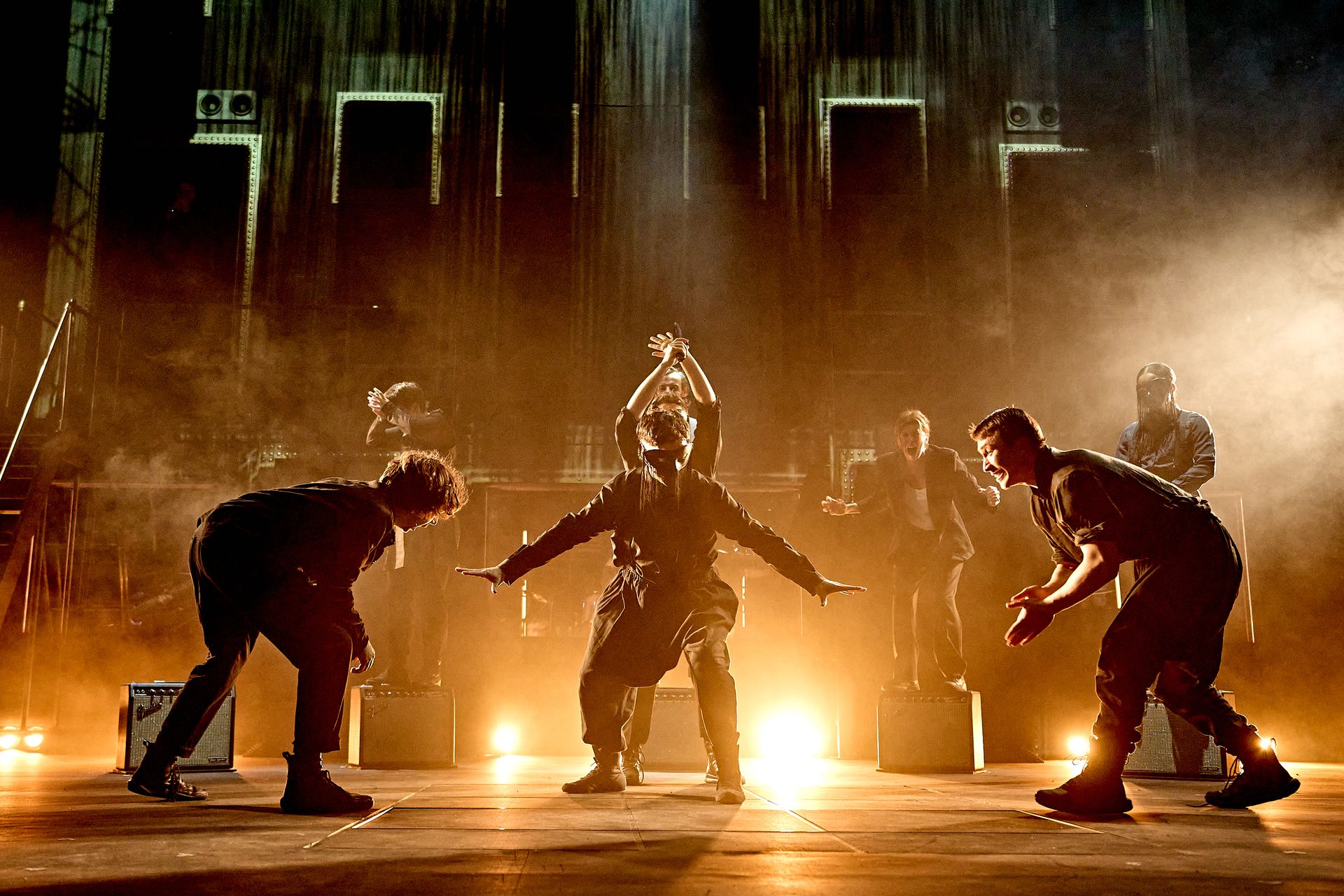
Opening today for a three-month run at London’s Barbican, Hamlet Hail to the Thief is a kinetic, musical, theatrical marriage – you might say mash-up – of a 2003 Radiohead album and Shakespeare’s play. Premiered in 2025, with brief runs in Manchester and Stratford, it comprises 27 scenes, with a running time of 90 to 100 minutes and action soundtracked by Yorke’s jigsawed versions of the Hail to the Thief album’s 14 songs.
Yorke, ever the iconoclast, described the show to Craig McLean: ‘It moves at a fast pace. It’s not four hours. It doesn't have long soliloquies where you can go to sleep, wake up again, you’ve still not missed anything...’ He caught himself and smiled. ‘Um...Did I say that?’
He did indeed, and a lot more besides, when, over lunch break at rehearsals, McLean sat down with Yorke and co-directors Steven Hoggett and Christine Jones to discuss the third and biggest outing for their innovative show.
|
From Kahlo to O’Keeffe, a world tour of artists’ modernist houses |
|
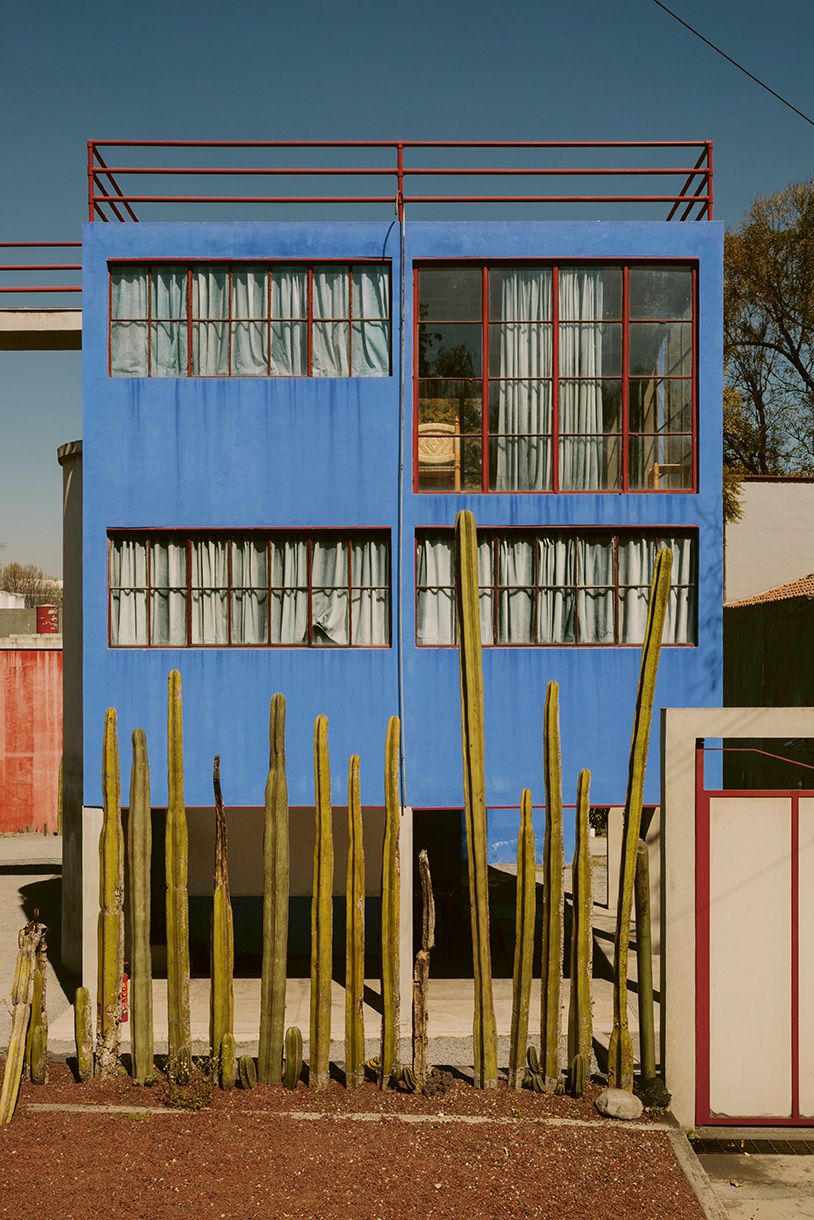
Intrigued by where creatives live? Artists’ Modernist Houses, a new book from publisher Batsford, takes us on a fascinating journey across scales and territories in the midcentury movement, looking at homes around the world ‘which are or have been lived in by artists’. Authored by Wallpaper* contributor and former staffer Harriet Thorpe, it compiles 50 examples – from Georgia O’Keeffe’s ranch in New Mexico to the Bauhaus Masters’ Houses in Germany, and the studio and houses of Frida Kahlo and Diego Rivera in Mexico City (pictured).
‘I’ve always loved visiting artists’ house museums, where the aura of the artist remains, absorbed through their personal objects [such as] notebooks and sketches, [and] their daily views and working processes. I feel like in those kinds of rooms you can really start to understand an artist on a deeper level,’ Thorpe tells Ellie Stathaki. She describes working on the book as a journey of discovery into the ‘relationship between modern art and modern architecture in the 20th century’. It’s also a great excuse for some house tours.
|
|
Go behind the scenes of Robert Wilson’s creative universe with a new memoir |
|
‘This is a man who is almost perfectly visual,’ said the writer and painter Etel Adnan of her friend Robert Wilson. The renowned artist and theatremaker, who died last year at the age of 83, was a designer at heart. He thought by drawing, painted with light, and sculpted time and space with silence. Yet Wilson was also a Texas-born teller of tales. He overcame a childhood stutter to hone a speaking voice that shared the captivating, expansive, and finely calibrated character of his work for the stage.
Wilson’s dreamlike certainty and disarming charisma take on a new form in his highly anticipated memoir from Penguin Press. Written with actor and author Keith McDermott, The Space Behind the Face unfolds in stories arrayed according to the three traditional ways that artists construct space: portrait, still life, and landscape. ‘When we started it, I was thinking chronologically,’ McDermott tells Stephanie Murg. ‘Well, that wouldn’t work with Bob. In our discussions, he just wouldn’t stay on subject, and I cringed whenever I heard my own voice on the tapes, interrupting and saying, “But don’t forget…” I realised that as Texans, we’re storytellers. We’re loquacious. He often went into Texas twang mode when telling some of these stories.’
|
|
|
| |