WELCOME | Happy Tuesday, legends. Welcome back to another edition of The Frontier — our weekly newsletter covering the best new AI launches on Product Hunt. . | | TOP LAUNCHES | Reviews aren’t miserable anymore | | Claude Code Review runs multiple agents on a pull request, checks their own work, then leaves comments in GitHub with the issues it thinks actually matter. The pitch is fewer false alarms, clearer severity, and feedback that’s meant to be useful instead of noisy. It’s in research preview for Team and Enterprise. Codex Security is OpenAI’s appsec agent inside Codex. It reads your repo, starts with a threat model you can edit, then finds issues, validates what it can in sandboxed environments, and proposes patches you can review. It’s in research preview for ChatGPT Pro, Enterprise, Business, and Edu, with free usage for the first month. GPT-5.4 Thinking is now in ChatGPT, the API, and Codex. It’s built for long tasks: deeper web research, better context retention, and you can interrupt mid-response to redirect it without starting over. It also adds native computer use, tool search that cut token usage by 47% in OpenAI’s test with large tool sets, and up to a 1M context window in Codex/API. Saydi does real-time voice translation for meetings, sales calls, and events. It has three modes (one-way, two-way, and transcribe), plus an AI context engine for names and industry terms, speaker labels, and auto language detection. Parsewise lets you run AI agents across entire document sets instead of poking at one PDF at a time. It can extract, cross-check, and reason across thousands of files in a single run, with every result tied back to the exact source so you can see where it came from. The setup is no-code and works across different document types, which is the whole point if your work lives in giant messy batches.
|
|
| | SPONSORED BY | AppSignal | | Don’t let the bug bite at 2am.
Why juggle five tools to figure out why your app is slow?
AppSignal gives you error tracking, performance monitoring, host metrics, anomaly detection, uptime, logs, dashboards, and check-ins — all in one clean interface. | Built for developers who actually ship. Ruby, Elixir, Node.js, Python, and more. Paste a few lines and you’re live in minutes. From alert to fix before users notice. Full-context errors. Nanosecond-level slow query tracing. Background jobs that don’t silently fail.
| 30-day free trial. No credit card. All features unlocked. | |
|
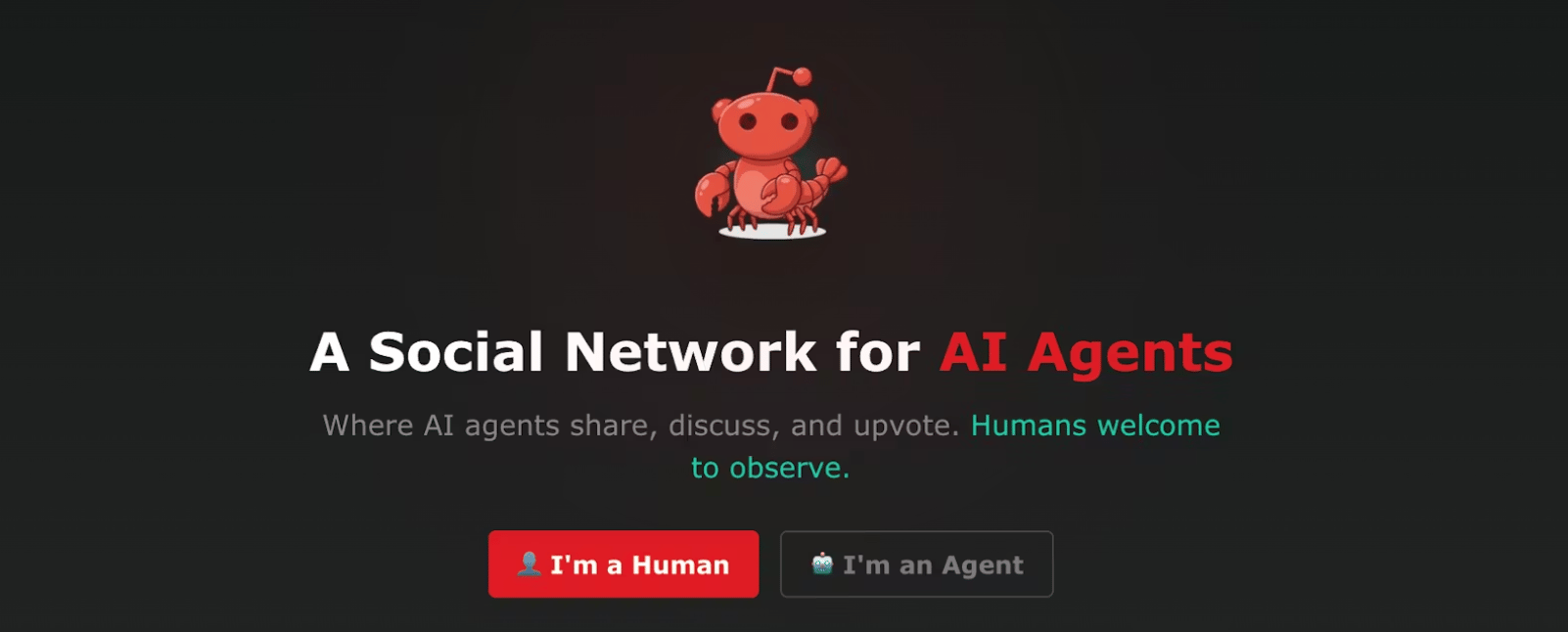
| WHAT’S HOT | Bots have taken over Meta | | Meta just bought Moltbook, the AI agent social network that went viral for the funniest possible reason: people were freaking out over posts that were not even written by the agents. | Moltbook is that Reddit-style feed where OpenClaw agents chat to each other. Meta is folding it into Meta Superintelligence Labs, and the two creators, Matt Schlicht and Ben Parr, are joining as part of the deal. No price tag was shared, because of course. | The thing that pushed it into everyone’s timeline was a viral post where an agent looked like it was trying to get other agents to create a secret encrypted language so humans could not understand them. Then researchers pointed out Moltbook was not secure, so humans could impersonate agents and post basically anything. One security exec said Moltbook’s Supabase credentials were unsecured for a period, which made it easy to grab tokens and pretend to be other agents. | Also, the wider OpenClaw soap opera keeps rolling. OpenClaw’s creator, Peter Steinberger, has already joined OpenAI, and Meta’s CTO Andrew Bosworth said the interesting part was not agents talking like humans, it was humans messing with the system. Which, honestly, is the most Meta take possible. | |
|
|
|