The 2027 equipment cycle is on the horizon. Tyrrell Hatton just won the DP World Tour Championship with Ping’s yet-to-be-released G450 LST in the bag, and it's natural to start looking ahead at what's coming down the pipeline. New product generates excitement—that's the nature of the business.
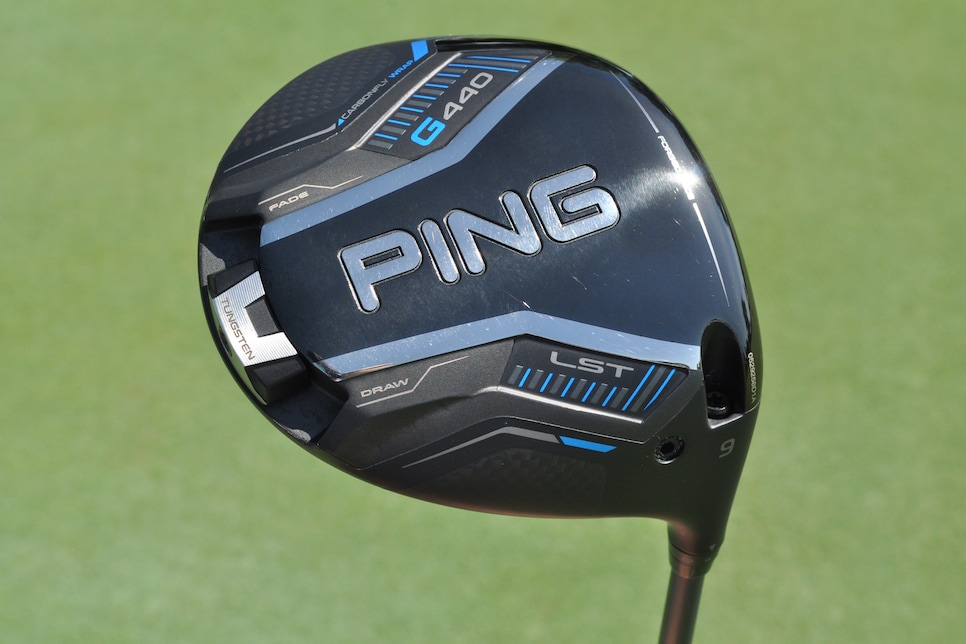
But a new cycle doesn't make the current product irrelevant overnight. And Ping's G440 LST remains one of the most intriguing drivers we've ever put on the swing robot.
For as long as low-spin drivers have existed, the tradeoff has been understood: you get speed and reduced spin, but you give something back on off-center performance. A more forward CG produces more ball speed; a rear CG delivers more forgiveness. In the past, engineers have been forced to pick a side and live with it. That's the tradeoff.
However, the G440 LST didn’t seem to care about the deal.
When we ran it through robotic testing at Golf Laboratories at 95 mph—an average male golfer’s swing speed—it posted speed and carry numbers you'd expect from a low-spin design. That was anticipated. What wasn’t expected was how it held up everywhere else. The dispersion data, the carry consistency across the face, the way it performed against Ping's own max-forgiveness head—none of it followed the usual script.
Our full analysis breaks down exactly how the G440 LST defied its own category—and what that means if you're weighing your options before the next wave of product hits the shelves.
|
Ping’s current low-spin offering has staying power |
Tyrrell Hatton won the DP World Tour Championship by five strokes over Rory McIlroy with a driver golfers can’t buy—yet. The 9-degree Ping G450 LST driver and 21-degree G450 Max 7-wood Hatton used in Dubai were only recently added to the USGA and R&A’s conforming driver list, which adds some early intrigue for a club we know little about.
If one design feature is drawing early interest, it’s the sole slot. Conforming list photos of the G450 show a feature labeled FASTFLEX that appears to take an approach similar to TaylorMade’s Speed Pocket and Mizuno’s Coretech Chamber. Sole slots like those are generally designed to let the face flex more. That usually translates to more ball speed lower on the face, which is a common mishit location for recreational golfers.
Ping has yet to confirm any details regarding G450’s design. But with Hatton putting the driver in the spotlight early on, interest in G450 will no doubt increase as January's launch season approaches.
|
Titleist already leads the way in hybrid usage on tour.
It accounts for 48 percent of hybrids played this season on the PGA Tour, more than double the next brand. So the question for the new GTS1, GTS2 and GTS3 is less whether players will take to them than whether they improve on what those players already use.
All three models were on Titleist's tour truck at the RSM Classic and the LPGA’s CME Group Tour Championship, with reps working through first swings with players to gather on-site feedback.
Titleist has yet to comment on the technology housed inside, but based on images from RSM, they continue to feature similar profiles and adjustable weight configurations in the sole.
Hybrid usage has waned on tour as interest in high-lofted fairway woods has grown. Still, several pros made headlines with Titleist hybrids this season, including Cameron Young, who won the Players Championship with a 20-degree GT1 and the PGA Championship with a 24-degree GT2.
|
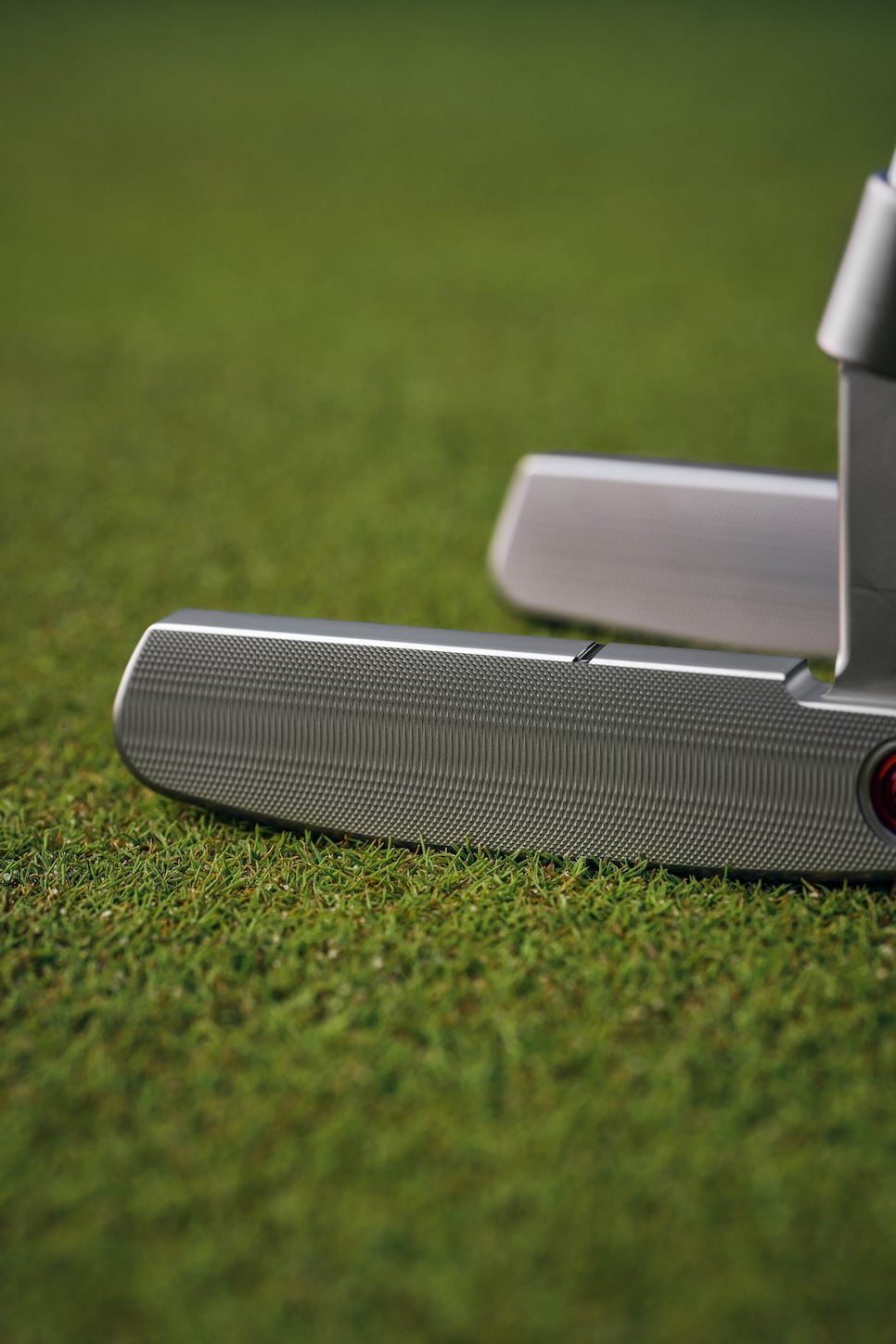
Scotty Cameron’s next-generation blade and mid-mallet putters have surfaced on the PGA Tour. The RSM Classic at Sea Island Golf Club was the first chance for players to get their hands on the new range. The biggest change, at least for the blades, appears to be a shift away from the chain-link milling found on Cameron's current Studio Style line to a more traditional milling pattern.
Austie Rollinson, Cameron's senior director of putter R&D, says the team learns a lot by watching its tour reps work with players: "When I go out there, I like to just be a sponge and listen and watch our reps work with players, help when I can," he said "I get a lot of inspiration, a lot of ideas from that... So it's great to listen to these guys, just the things that they’re looking at that we may not look at day-to-day in a putter."
Players already gaming a Cameron blade or mid-mallet include Michael Brennan, Ludvig Åberg, Ryan Gerard, Tom Kim, Bud Cauley, Sungjae Im and Jordan Smith. In the past, Cameron's tour launches have usually hinted at a forthcoming retail release. If that pattern holds, the new range should reach shelves within the next few months.
|
|
|
|