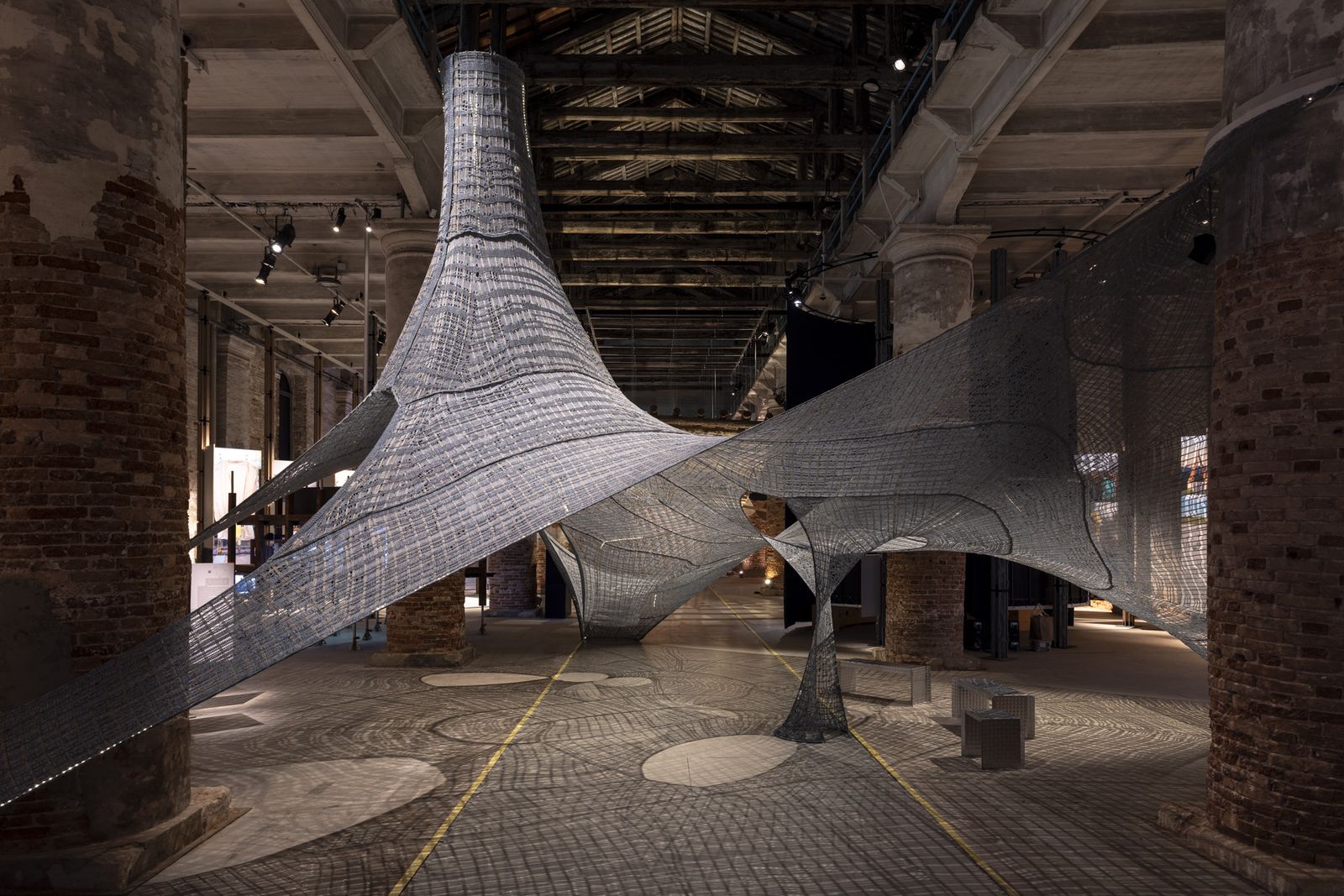
| | Ellie Stathaki, architecture & environment directorAt Wallpaper*, we often flag openings and launches – the unveiling of a new space, product, building or collection. Yet, November also marks an important closure too; the ‘finissage’ of the 2025 Venice Architecture Biennale. This international exhibition is a dominant staple in the world’s design calendar, sure to ignite a thousand comments, questions and much-needed debates. Many flock to attend the closing week, as the organisers turn up the volume on activations during those precious last few days. As the current show (pictured) prepares to shut its doors this weekend, we caught up with its curator, Carlo Ratti, to reflect on the world’s biggest architectural festival and its impact. |
 |
 |
|
Fittingly, I travelled to Venice myself a few days ago, for a symbolic nod goodbye to the biennale, but with a brand new mission too. The Holcim Foundation’s awards were celebrated there this week. The organisation announced its grand prizes, rewarding studios across the globe for forward-thinking designs in the realm of sustainable building (selected from 20 projects honoured in a previous round of awards). The ceremony formed the culmination of the Holcim Foundation Forum 2025, a powerful, invitation-only coming together of thinkers in the realm of sustainability, aiming to take stock on a global level and inspire solutions to tackle our environmental challenges. It all took place over three days in Marghera in the presence of some of the brightest minds in today’s architecture, engineering, policy making and climate science. I left feeling motivated and inspired – and dare I say, optimistic, about the creative world’s ability for innovation. Weekendpaper*, too, is embracing innovation this week – we visit the Birkenstock factory in Germany, where craft and technology collide in cork-soled harmony; drop in to make a film with designer Marcin Rusak at his studio in Poland, where decaying plant matter becomes delectable design; and try out the latest in AI gadgetry, from the discreet to the furry. |
|
 |
|
|
|
 |
|
 |
|
Inside the factory where your Birkenstocks are made |
|
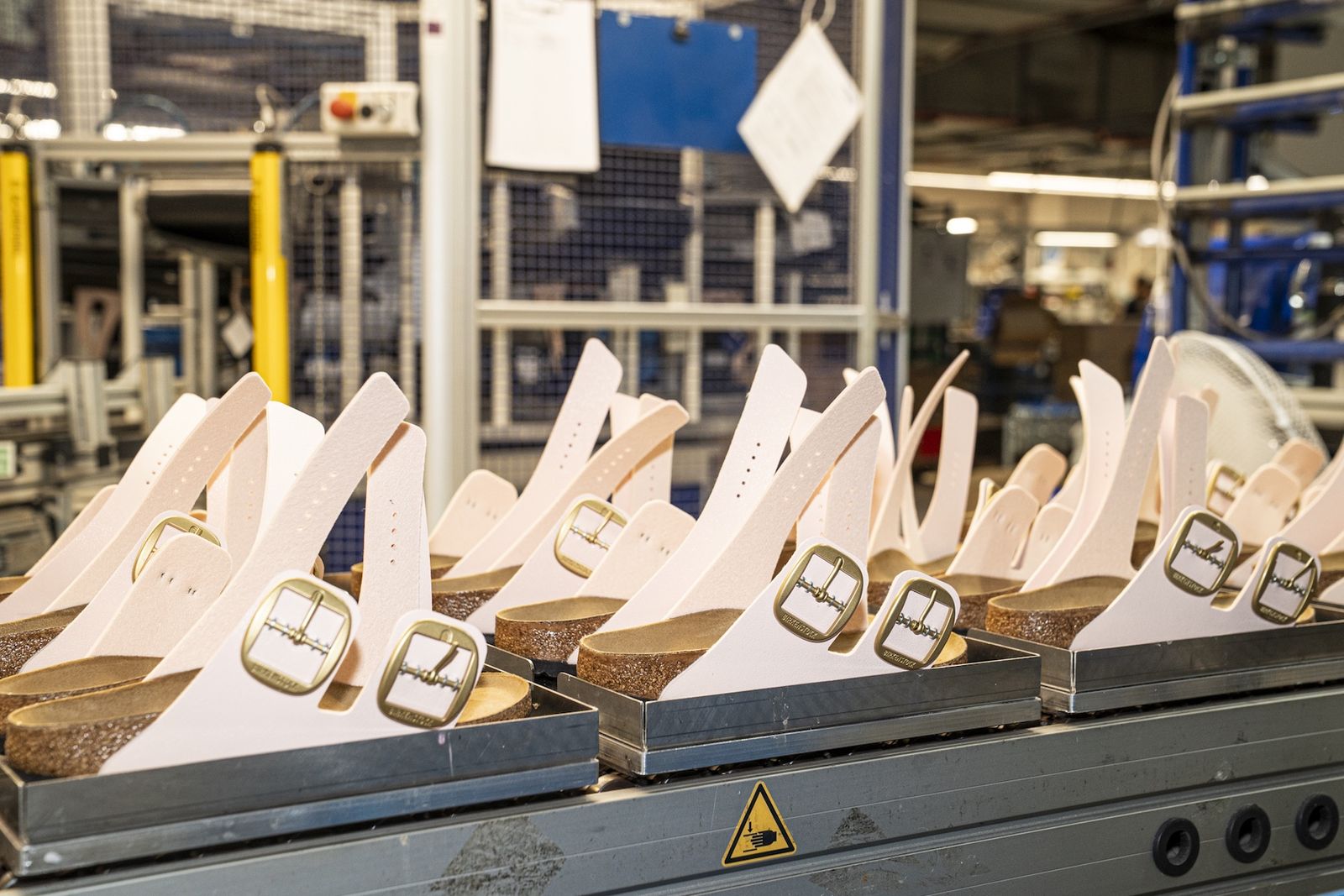
Standing in a faceless business park in Görlitz, Germany, you wouldn’t imagine the Willy Wonka wizardry happening inside its network of vast hangars. Quinoa-looking cork granules whizz through transparent pipes, webs of glue drip from old machines and leathers of all colours are stretched and punched into Matisse-style cut-outs. It’s part laboratory, part artisan workshop: it’s where your Birkenstocks are made. Everywhere you look, human hands and mechanical arms coexist in purposeful choreography. As well as mind-blowingly high-tech machines, there are workers wielding the kinds of tools that shoemakers would have used hundreds of years ago: bread knives are used to trim the jute in one corner, whilst robotic cutters trace laser-sharp outlines across sprawling hides in another. The famous cork footbeds are baked in steel moulds and emerge hot, pliable and aromatic, like loaves of bread from an oven. Every single one is still made in Germany, a point of pride that underscores the brand’s insistence on authenticity. ‘Birkenstock's shoemaking tradition dates back to 1774, and with that heritage comes a deep understanding of our craft,’ explains Markus Baum, Birkenstock’s chief product officer. Hot-foot it to Stuart Brumfitt’s article for the full factory tour. |
|
Marcin Rusak makes design out of decay |
|
‘I create objects and installations that are either meant to last or decompose and disappear,’ says designer and artist Marcin Rusak when we visit him at his studio outside Warsaw to shoot the latest film in our Work in Process series.
When he was young, his grandfather, a botanist, taught him about the wonders of the natural world – and its inevitable cycles of decline. His flower business closed before Rusak was born, and the designer’s earliest memories are filled with abandoned, overgrown greenhouses. Today, he collects discarded flower and plant matter from growers or supermarkets before bringing it to his studio to be ‘processed’. These organic elements are often embedded in clear or coloured resin and combined with metals, glass and wood, and shaped and layered into cabinets, vases and lamps. ‘“Alchemy” is a word I use quite a lot to describe my practice, because it’s a combination of elements and something that happens in between them – some sort of secret interaction,’ he says.
Watch the film – produced by head of video Sebastian Jordahn – to see Rusak in action at his studio, flower library and off-site ‘natural incubator’ where he observes how nature interacts with his pieces.
|
|
From smart glasses to ‘empathy’ machines: what AI gadgets get right (and very wrong) |
|
Where, oh where are we at with AI? Is it pernicious nonsense or the ultimate toolset for every application? It’ll come as no surprise to find that we at Wallpaper* are regularly tapped for our opinion on the latest developments – both hardware and software – and frequently offered the AI-driven services of start-ups aiming to solve all manner of problems.
There is an inevitability to certain AI-powered services, given the obvious benefits and use cases of things like instant, in-ear translation. And AI assistants in some form are clearly here to stay, even if they’re just used to check recipes, train times and weather reports. Meanwhile, all creative endeavours, from architecture to music, podcasting to baking, are threatened by an overt reliance on AI-generated content – ‘make any song you can imagine’, Suno promises, while Gemini offers to ‘help me write’, and Midjourney, DALL-E, Synthesia, Veo, et al offer hacks for a fast-track path to the top of the slop pile.
In the spirit of enquiry, Jonathan Bell has assembled a collection of six contemporary AI-powered standalone accessories – from a pocket-sized translator to an in-earbud assistant, and a furry companion – and considers which, if any, deliver on their promises.
|
|
|
| |



.gif)