| | Jack Moss, fashion & beauty features directorAmid unprecedented temperatures at Paris Fashion Week Men’s, the Wallpaper* style team have been runway-side regardless, reporting via our live blog to offer a first look at the shows, presentations and parties as they happen. The heat has certainly dominated headlines, wilting guests welcoming the gentle misting afforded by both Pharrell Williams’ tidal wave of a set for his Louis Vuitton collection, and the looping fountains of the Palais de Tokyo forecourt, where Rick Owens’ show unfolded in the already-sweltering midmorning. Meanwhile, inside the Paris Tennis Club, where Julian Klausner continued a thrilling run of collections at Dries Van Noten, the space’s greenhouse-like construction required ice lollies, water, hundreds of fans and two paramedics on standby to keep guests cool. |
 |
 |
|
Rising mercury aside, though, there has been much else to dissect, and celebrate, from Jonathan Anderson’s Fred Again-soundtracked Dior menswear show in the grounds of Paris’ Musée Nissim de Camondo – a wardrobe of ‘sampled and remixed’ classics’, as the designer described – to the sensual ease of Anthony Vaccarello’s silhouettes for Saint Laurent, a collection staged amid Fujiko Nakaya’s Cloud #07156 installation, currently on display in the Tadao Ando-designed rotunda of the Bourse de Commerce – Pinault Collection. Following stops in Florence for Pitti Uomo and Milan, Men’s Fashion Month S/S 2027 concludes in Paris on Sunday – stay tuned for the hottest news. |
Martin Parr’s final exhibition is ‘the perfect way to end’, says his wife Susie |
|
It’s a scorching day at Lacock Abbey, in the village of Lacock in Wiltshire, and, beneath the screeching of low-flying swifts, Martin Parr’s widow is in the National Trust property’s Manger Barn, discussing her husband’s final work, and his legacy. ‘This project, it really did resonate with him,’ Susie Parr says of ‘Lacock’, a series of portraits of English community and tradition, a year in the taking and curating, which the great photographer-documentarian completed shortly before his death, at 73, in December 2025, and is now on show at the abbey’s Fox Talbot Museum.
Spanning prize-winning vegetables, bell ringers, cricket and VE Day anniversary cake, the images marked ‘a return to [Martin’s] much earlier, more elegiac way of working. More connection, more gentleness,’ Susie tells Craig McLean. Did he like a cake to eat as well? ‘He loved a cake! He loved his cup of tea and a cake at 3.30pm. And the final picture in the [‘Lacock’ exhibition] book is his cup of tea and his plate with cake crumbs on it. For me, it’s a poignant full stop to the project.’
|
|
Meet the Haitian designer telling ‘profound stories about time and place’ |
|
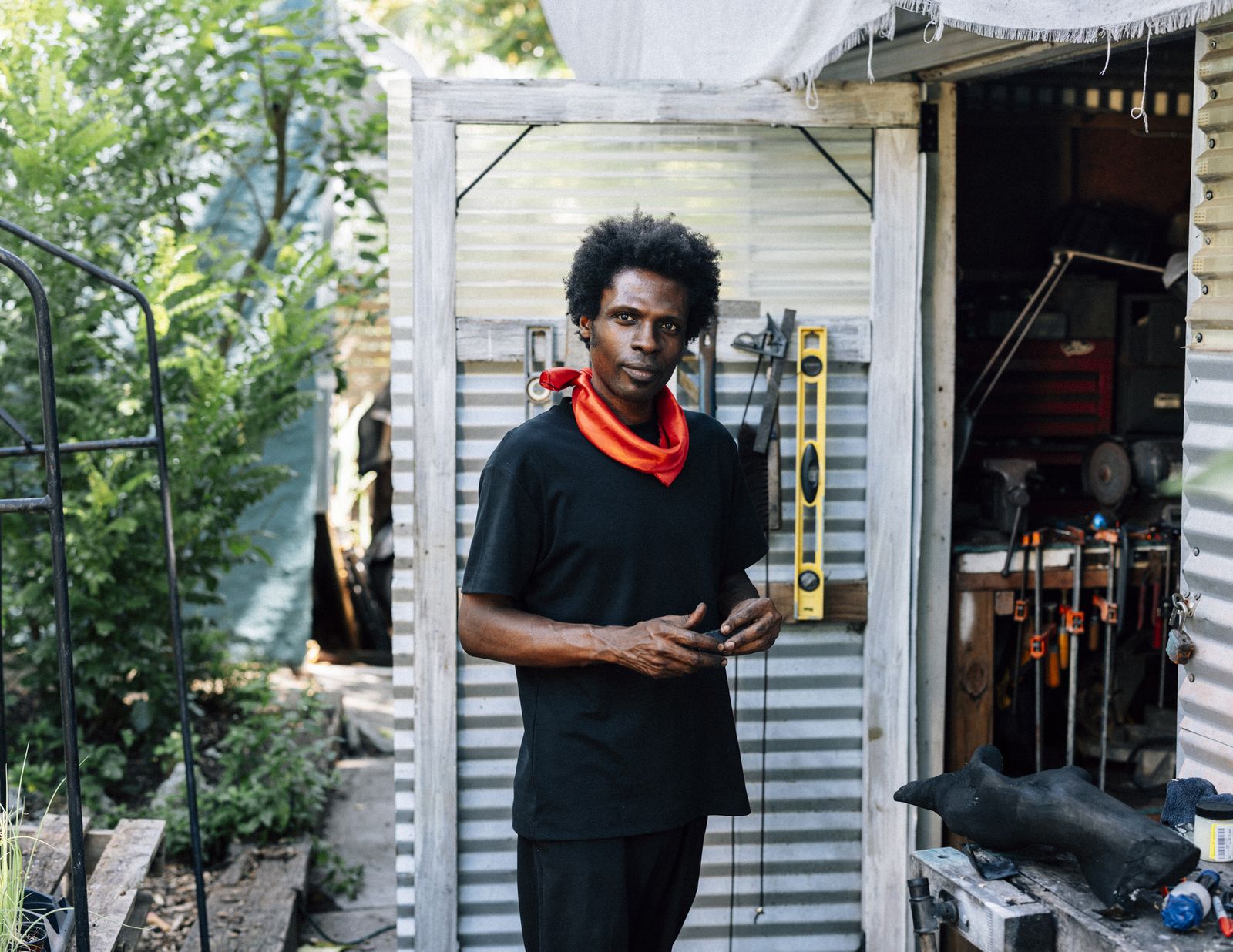
At the Haiti studio of architect, designer and Loewe Foundation Craft Prize finalist Hervé Sabin, the sounds of jazz, wood saws, chisels and sandpaper are punctuated by the din of automatic rifles and drones in the near distance. Yet Sabin’s process continues, undeterred, ‘not out of resistance’, as he puts it, ‘but out of existence’.
Working in precarious conditions, often in transit, has become a defining feature of his practice, which explores the intertwined threads of family, place and memory. Currently based in Port-au-Prince, and moving between the homes and studios of family and friends in Miami, New York and Montreal, he produces furniture and objects carved from weighty, sometimes gnarled trunks of salvaged wood found along the way. In his hands, these resistant materials are coaxed into softer forms with gently smoothed contours, shaped through an intuitive process of carving, charring, sanding and waxing that plays out as a push-and-pull between material and maker. Sabin takes Ali Morris on a tour of his itinerant practice.
|
|
Tour Toyota Woven City – a living mobility lab in Japan |
|
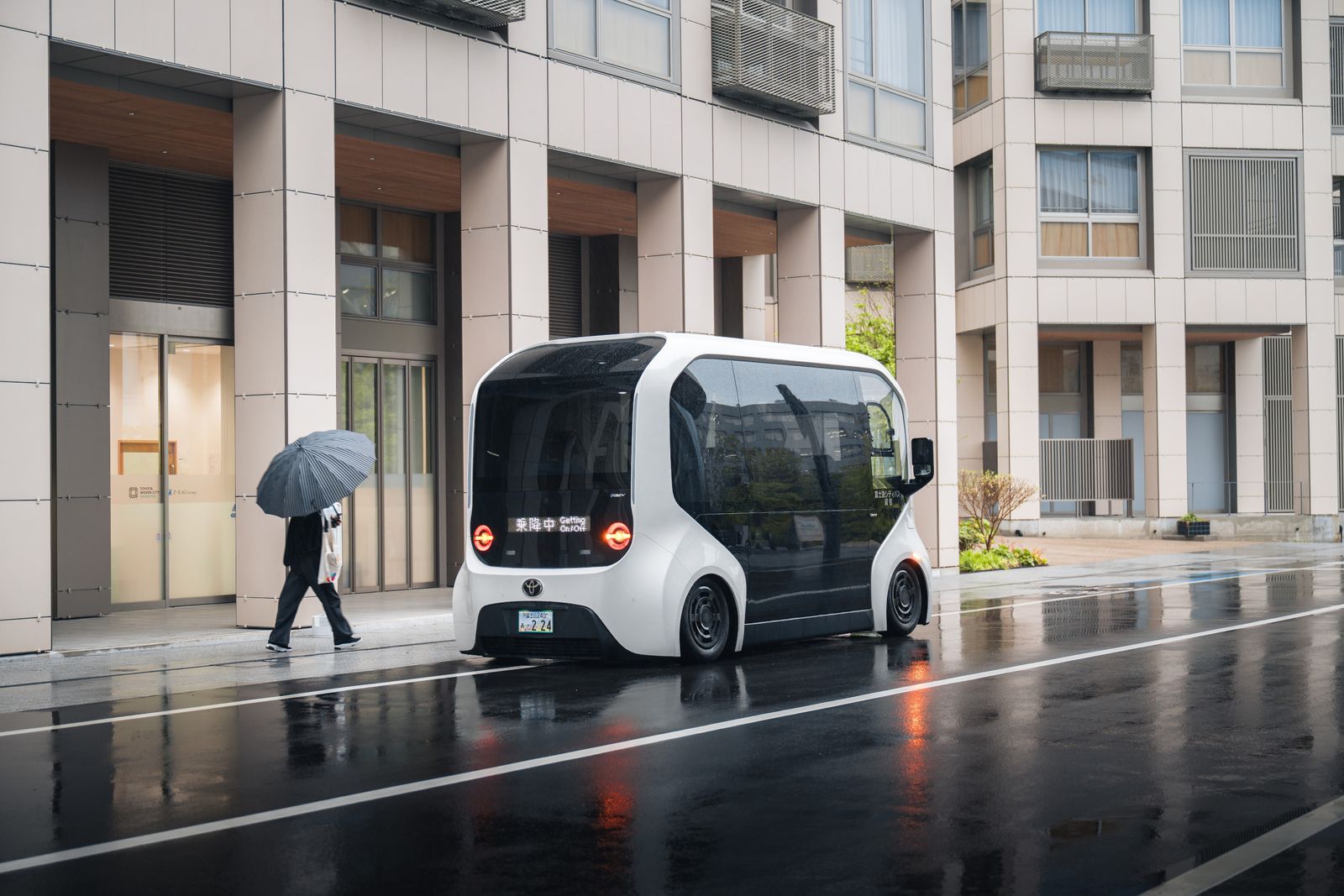
Toyota is the largest car maker in the world, a position it has held since 2008, innovating in both automotive and production technology. But it’s also busy working towards a transition into an all-encompassing mobility company, a move it announced back in 2018. Where better to explore the interaction between next-generation mobility and people than in your own test laboratory? Welcome to Woven City, Toyota’s purpose-designed community in Japan’s Shizuoka prefecture, close to Mount Fuji.
Described by the company as ‘a real-world test course for mobility innovation’, the ultimate aim is for this modest complex to serve as a place where Toyota’s experiments in mobility, autonomy, robotics and AI can be tried out in a full-scale, ‘live’ environment. Residents will be known as Weavers (the name Woven City is a nod to the company’s origins in industrial weaving and textile manufacture), while workers from Toyota and partner companies, start-ups and entrepreneurs, will live and work alongside each other. Already 50 households out of 300 are occupied. Hop on the e-Palette autonomous micro-bus for a tour with Jonathan Bell.
|
|
|
| |