Thanks for reading The Abstract. This month’s edition is
1,395 words, about a
5-minute read.
Is there a topic that you’d like to see more of in
The Abstract? Drop us a line at
abstract@elysiumhealth.com. Want to get
The Abstract in your inbox? Sign up here.
|
|

|
|
|
|
For the past decade, longevity science has moved from bold hypotheses to concrete human evidence.
The Abstract is where we track that shift—documenting the studies that changed how we think about aging. To celebrate Elysium’s 10-year anniversary, we’ve selected 10 studies from the past decade that defined mechanisms, tested interventions, and reframed aging as something measurable, targetable, and increasingly actionable—one paper at a time.
|
|
|
10 years. 10 studies. The science that shaped longevity.
|
|
|
|
|
“Over the past ten years, we have witnessed major advances in the science of aging (and how to slow it down). The development of
NAD+ boosters, arising from the sirtuins field, has begun to show benefit in human trials. In addition, new strategies to slow aging (senolytics) or even reverse it (cellular reprogramming) emerged and are being developed for practical use. Elysium is proud to be part of expanding human trials on aging interventions and in offering products for boosting NAD+ and clearing senescent cells, among others.”
|

|
|
The 10 papers chosen here represent some of the major advances in the past 10 years, which have placed us in an era of having agency in our own destiny.
|
|
Leonard Guarente, Ph.D.
Novartis Professor of Biology at MIT and Elysium co-founder and chief scientist
|
|
|
THE LAST DECADE
|
|
|
|
Top 10 Longevity Studies
|
|
+
These studies are third-party articles about science that we find interesting. Elysium’s products are not intended to screen, diagnose, treat, cure, or prevent any disease.
|
|
2015
|
|
Nicotinamide cuts skin cancer risk—by nearly a quarter
+
|
|
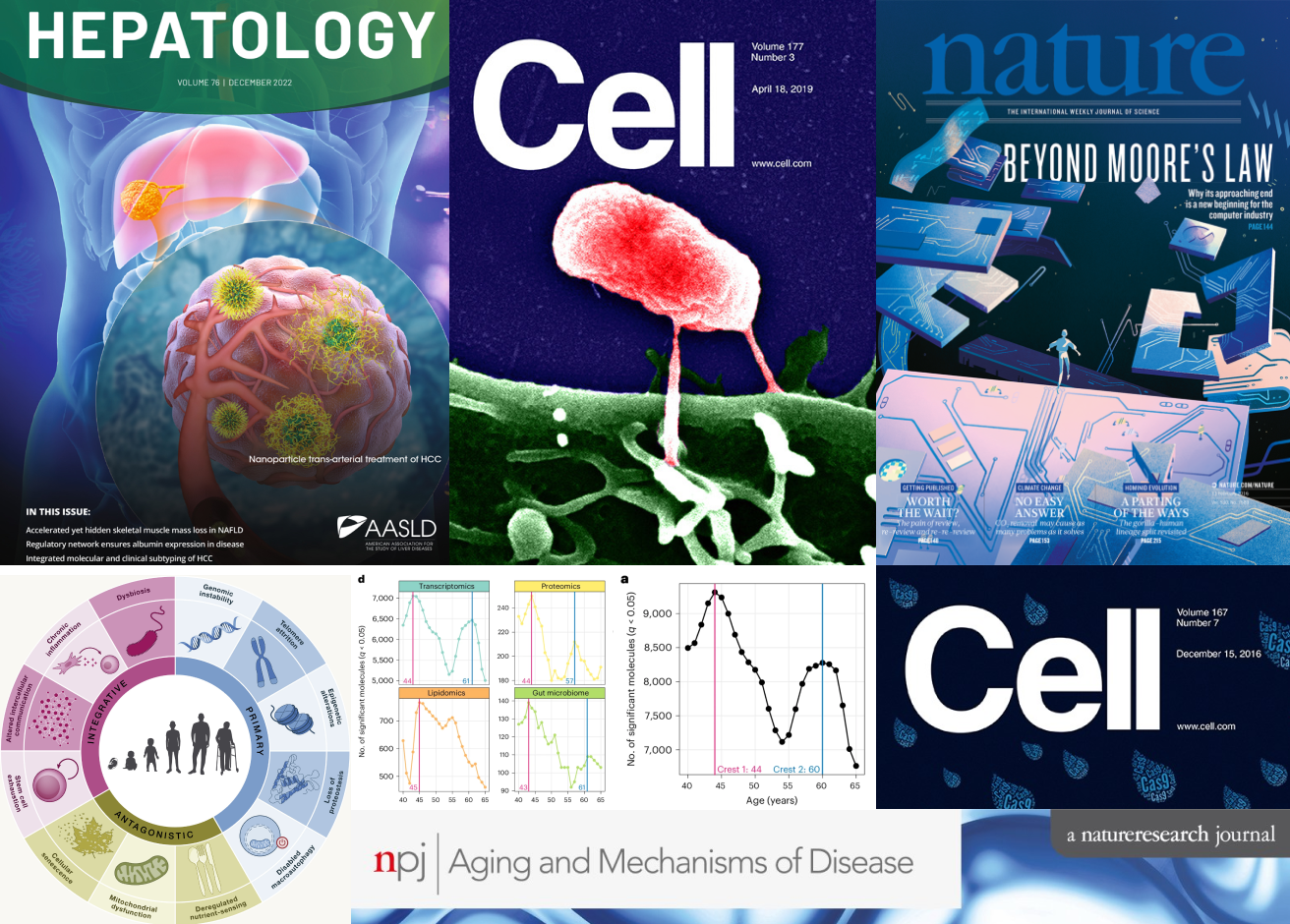
In a landmark phase 3 randomized trial, daily nicotinamide reduced the rate of new nonmelanoma skin cancers by 23% in high-risk adults over 12 months. High-risk adults were defined as those with at least two nonmelanoma skin cancers (basal-cell or squamous-cell carcinoma) within the previous five years. Participants taking 500 mg twice daily also developed significantly fewer actinic keratoses—precancerous skin lesions linked to UV damage—without meaningful safety concerns. The study provided some of the strongest early human evidence that cellular energy metabolism and DNA repair play a direct role in skin cancer prevention. (New England Journal of Medicine)
|
|
2016
|
|
Clearing senescent cells improves healthspan
+
|
|
As animals age, some cells enter a dysfunctional state known as senescence—stopping division but continuing to release inflammatory signals that damage surrounding tissue. In aging mice, selectively clearing these senescent cells beginning in midlife delayed decline across multiple organs, including the heart, kidneys, and fat tissue, while preserving normal wound healing. Both lifespan and healthspan improved. The findings helped shift the field’s understanding of aging, showing that senescent cells actively drive age-related deterioration and that removing them can meaningfully extend years lived in better health. Additional
research is needed to confirm whether the same results would be extrapolated to humans. (Nature)
|
|
2017
|
|
Turning back the epigenetic clock
+
|
|
A
Cell study showed that brief activation of the Yamanaka factors (OSKM) can reverse markers of aging in mice without erasing cell identity—the stable gene programs that make a cell a neuron, muscle cell, or skin cell. In mice with accelerated aging, short, cyclic reprogramming restored youthful epigenetic patterns, improved tissue function and regeneration, and extended lifespan. The findings helped clarify the role of dysregulation of epigenetic marks in aging and showed that some aspects of biological aging may be reversible (at least in animal models). (Cell)
|
|
2017
|
|
You can raise NAD+ in humans—safely and sustainably
|
|
In 2017, Elysium published the first placebo-controlled human trial to show that NAD+ levels can be safely and sustainably increased with oral NR supplementation. In a double-blind study of 120 adults ages 60–80, daily
Basis supplementation (nicotinamide riboside + pterostilbene) raised cellular NAD+ levels by an average of 40% in 30 days, with increases sustained at 60 days. The study is now one of the top 10 most-cited NAD+ randomized controlled trials and ranks in the top 1.8% of cited research worldwide, creating the foundation for translating NAD+ science from animal models into humans. (NPJ Aging and Mechanisms of Disease)
|
|
|
|
|
|
2018
|
|
Biological age, defined
|
|
Led by Morgan Levine, Ph.D., who helped develop
Index, this work introduced DNAm PhenoAge, an epigenetic clock designed to measure biological aging rather than time alone. By integrating DNA methylation with clinical biomarkers, it more accurately predicted mortality, disease risk, and functional decline than earlier clocks—helping establish aging as something that can be measured and compared. This framework now underlies modern biological-age tools, including Elysium’s Index, translating epigenetic insights into actionable measures of how fast the body is aging. (Aging)
|
|
2020
|
|
SIRT6 links DNA repair to longevity
|
|
By comparing 18 rodent species with dramatically different lifespans, researchers showed that efficient DNA double-strand break repair—not all DNA repair—is a defining feature of long-lived species. The study identified the NAD+ dependent enzyme SIRT6 as a key driver: SIRT6 proteins from long-lived animals were markedly better at repairing DNA damage, reducing cellular senescence, and extending lifespan—even when transferred into short-lived species. The work helped establish DNA repair capacity as a core mechanism of longevity rather than a downstream consequence of aging. (Cell)
|
|
2022
|
|
Basis reduces markers of liver inflammation
|
|
In a six-month double-blind, placebo-controlled clinical trial,
Basis (nicotinamide riboside + pterostilbene) reduced multiple markers of liver inflammation in adults with nonalcoholic fatty liver disease—a precondition to all major metabolic disorders with rising prevalence that is estimated to affect 42% of adults in America. While liver fat content was unchanged, participants taking the recommended dose showed significant declines in multiple markers of liver inflammation.
“This study provides novel evidence that targeting pathways of aging with natural compounds could help reduce liver inflammation in patients with this condition,” said Dariush Mozaffarian, M.D., a co-author on the study and Jean Mayer Professor at the Tufts Friedman School of Nutrition Science and Policy, professor of medicine at Tufts School of Medicine, and Elysium Health Scientific Advisory Board member. (Hepatology)
|
|
2023
|
|
The biology of aging, unified and expanded
+
|
|
A decade after introducing the original framework, López-Otín and colleagues updated the hallmarks of aging to reflect the growing body of research about the mechanisms of aging as well as translational evidence. The revised model expanded the hallmarks to twelve—including genomic instability, telomere attrition, epigenetic alterations, loss of proteostasis, disabled autophagy, deregulated nutrient sensing, mitochondrial dysfunction, cellular senescence, stem cell exhaustion, altered intercellular communication, chronic inflammation, and dysbiosis—and sharpened the criteria for causality by requiring that each be experimentally manipulable. The paper helped consolidate aging research around shared, targetable biological mechanisms. (Cell)
|
|
2024
|
|
Is radical life extension possible this century?
+
|
|
Analyzing longevity data from the world’s longest-lived populations, researchers found that life expectancy rose slowly until the 20th century, then accelerated—by roughly three years per decade—due to sanitation, antibiotics, and public health. Gains have slowed over the past 30 years, leading the authors to argue that further radical life extension is unlikely without interventions that slow biological aging itself. Other experts disagreed: Luigi Ferrucci pointed to prevention and delayed disease onset, while Steven Austad argued that a true breakthrough in targeting aging could allow someone alive today to reach 150. (Nature Aging)
|
|
2024
|
|
Aging isn’t gradual after all
+
|
|
Longitudinal multi-omics profiling revealed that human aging does not proceed smoothly, but accelerates in at least two distinct waves—around ages 44 and 60. Tracking thousands of molecules across blood, microbiome, and tissues, researchers found coordinated shifts in metabolism, immune regulation, and cardiovascular markers that occurred abruptly rather than incrementally. The findings challenged the assumption that aging is continuous, suggesting instead that it unfolds through discrete biological transitions that may represent windows for targeted intervention. (Nature Aging)
|
|
|
|
TERM OF THE MONTH
|
|
Nicotinamide adenine dinucleotide
|
|
/ˌnɪkəˈtɪnəˌmaɪd əˈdiːn daɪˈnuːklɪəˌtaɪd/
|
|
A central coenzyme found in all living cells that enables energy production, DNA maintenance, and cellular signaling. NAD+ levels decline with age, making it a key focus of research into metabolism, cellular resilience, and longevity.
|
|
|
|
|
|
AGING 101
|
|
Top 10 longevity studies of 2024
|
|
|
|
|
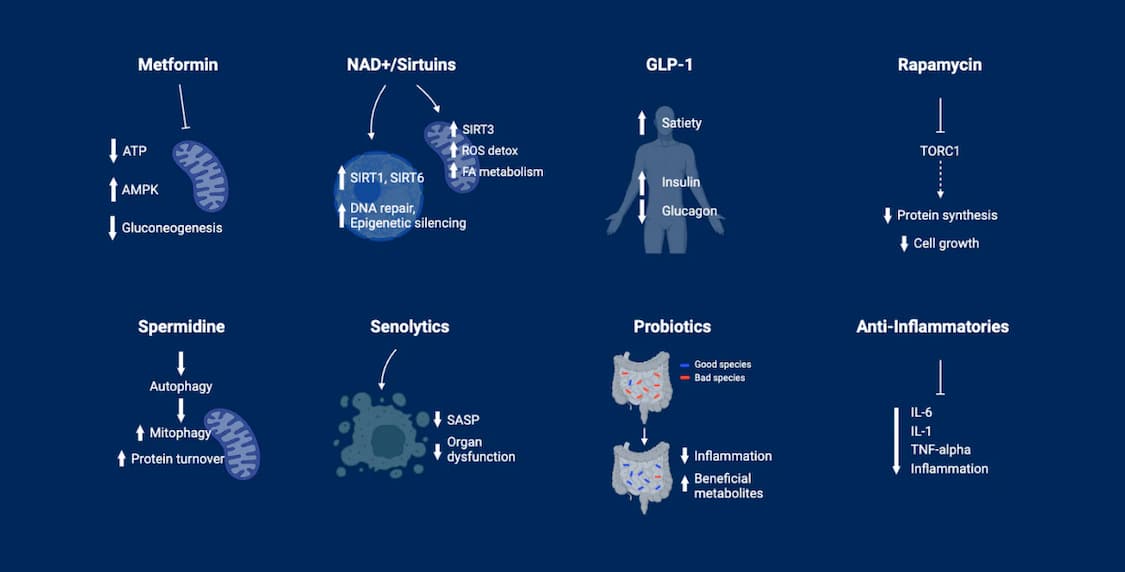
Want to learn more about the most important recent longevity studies? Read our picks from last year—the top 10 aging and longevity studies of 2024, as chosen by our expert team of scientists, including Elysium co-founder and renowned longevity researcher, Leonard Guarente, Ph.D. (Read more)
|
|
|
|